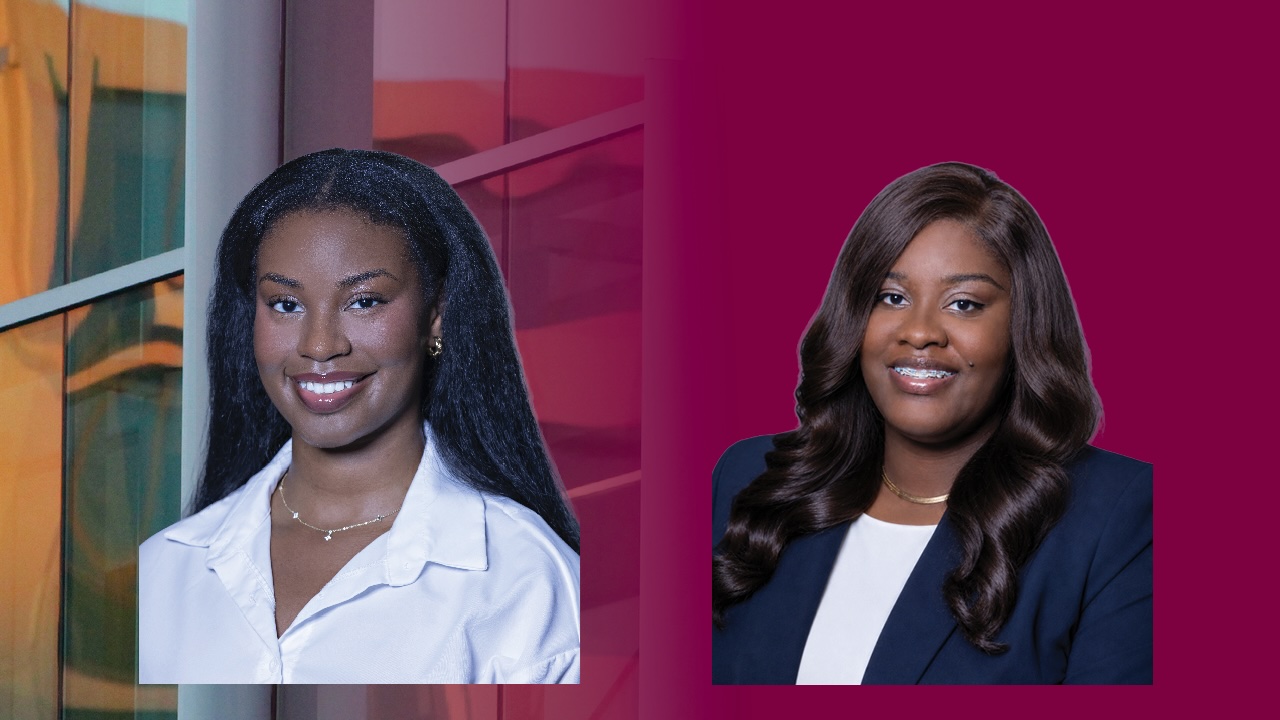
Meharry Medical College researcher named a 2026 Nashville Tech Studio Civic Tech Jam winner, earning $40,000 to help make Nashville’s buses run on time
When people think of Meharry Medical College, they think of a legacy — 150 years of training the physicians, dentists, and scientists who have transformed health care access for underserved communities. What they may not expect is a Meharry researcher standing at the intersection of traffic signals, GPS data, and public transit reliability. But that is exactly where Dr. Naw Safrin Sattar has planted Meharry’s flag, and the city of Nashville is better for it.
Meharry Medical College is proud to celebrate Dr. Sattar as one of five university-based innovators honored at the Nashville Innovation Alliance’s 2026 Annual Forum, “Celebrate Progress, Build What’s Next,” held July 30 at the National Museum of African
American Music. Dr. Sattar was named a winner of the Nashville Tech Studio Civic Tech Jam, a competitive program that pairs university researchers with Metro Nashville departments seeking real, technology-driven solutions to civic challenges. Her project, “Pinpointing Intersection Bottlenecks: A Spatio-Temporal Graph-based Big Data Framework for Isolating Bus Delay using GPS and Signal Timing Logs,” was selected from a competitive field and awarded up to $40,000 in project funding — with additional AWS computing credits to power the work — through the Nashville Innovation Alliance’s Tech Studio, in partnership with Vanderbilt University and Launch Tennessee.
Turning Big Data Into a Better Commute
Every Nashvillian who has waited on a bus that never quite arrives on schedule understands the problem Dr. Sattar has chosen to solve. Working in partnership with WeGo Public Transit, her project digs into the tangle of traffic signals, congested intersections, and vehicle-location data to answer a deceptively simple question: where, exactly, are Nashville’s buses losing time, and why?
By fusing vehicle-location data, traffic-controller signal logs, and other transportation data streams into a spatio-temporal graph framework, Dr. Sattar’s research doesn’t just describe the problem — it isolates it, intersection by intersection, so that city planners and transit officials can act on evidence rather than guesswork. It is applied data science in its truest form: rigorous enough to hold up to a review committee’s scrutiny, and practical enough to change how a bus rider’s Tuesday morning actually goes.
This is Dr. Sattar’s second major research funding success in a short span, following her acceptance into the U.S. Department of Energy’s Visiting Faculty Program at Lawrence Berkeley National Laboratory. Two competitive national and regional programs, two wins — a track record that speaks to the caliber of researcher Meharry has the privilege to call its own.
A Meharry Story, Told on a Civic Stage
Dr. Sattar was unable to attend the Annual Forum in person, so Dr. Shanker, Meharry’s Senior Vice President for Research and Innovation, proudly accepted the recognition on her behalf — a fitting symbol of an institution standing behind its researchers every step of the way. Dr. Sattar’s project was one of five selected from across Nashville’s leading research universities, alongside teams from Vanderbilt University, Tennessee State University, Middle Tennessee State University, and Lipscomb University, each tackling a distinct civic challenge, from survivor-narrative technology to LiDAR-powered traffic management. That Meharry — a historically Black academic health sciences center best known for medicine and dentistry — stood shoulder to shoulder with these institutions in a data science and civic technology competition is no accident. It is a signal of where Meharry is headed.
Why This Matters — For Every Meharry Student, Present and Future
For current Meharry students, Dr. Sattar’s recognition is a point of real pride. It is proof that the faculty walking these halls are not confined to textbooks or lecture slides — they are actively shaping the city students live, study, and train in. A Meharry researcher’s work may quite literally determine whether a classmate makes it to clinic on time.
For prospective students weighing where to pursue their education, Dr. Sattar represents the kind of mentor worth seeking out: a researcher who thinks beyond disciplinary boundaries, who partners directly with city agencies like WeGo Public Transit, and who translates cutting-edge data science into tangible community impact. To learn under Dr. Sattar is to learn how research leaves the lab and enters real life — how a well-built algorithm can mean a shorter commute, a more reliable transit system, and a more equitable city.
What Comes Next
With conditional funding approved and a revised project budget underway, Dr. Sattar’s work now moves from proposal to pilot — a chance to test her framework against the real rhythms of Nashville’s bus network in partnership with WeGo Public Transit. As part of the funding agreement, she will deliver a final report on the project’s outcomes, ensuring that what’s learned on Nashville’s streets informs not just this project, but the broader work of civic technology across the city.
Meharry Medical College congratulates Dr. Naw Safrin Sattar on this well-earned recognition. Her work is a reminder that the pursuit of health, equity, and quality of life in Nashville communities takes many forms — sometimes in a clinic, sometimes in a classroom, and sometimes in the space between a bus and a traffic signal, where a Meharry researcher is quietly making the whole city run better.
The Nashville Tech Studio Civic Tech Jam is an initiative of the Nashville Innovation Alliance, connecting university researchers with Metro Nashville departments to develop technology-based solutions to civic challenges. Learn more about Dr. Sattar’s project, “Pinpointing Intersection Bottlenecks,” and Meharry’s growing footprint in data science and civic innovation.