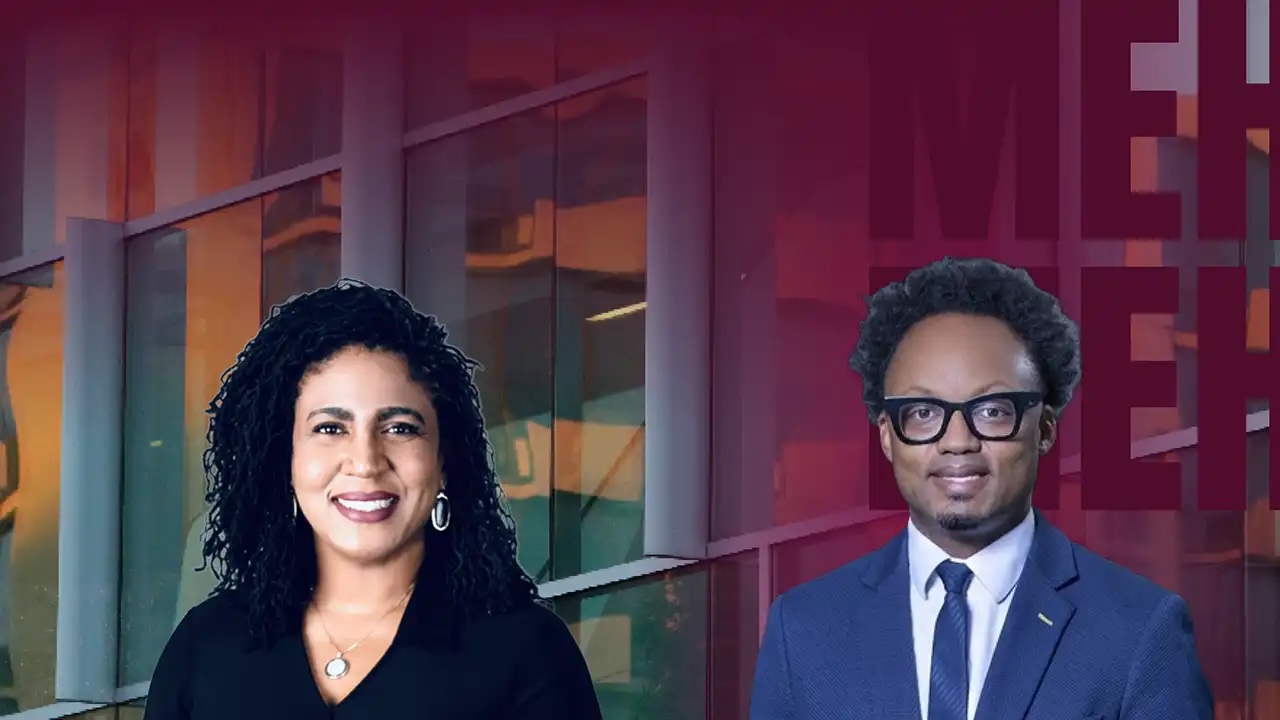
Pam Djan is committed to the fight against cancer. That passion fuels both her doctoral studies in biomedical data science at Meharry Medical College’s School of Applied Computational Sciences (SACS) and her work as a clinical research professional at The University of Texas MD Anderson Cancer Center. In September 2026, Djan started the 2026–2027 Institute for Data Science in Oncology (IDSO) Fellowship Program at UT MD Anderson after being selected as a fellow.
During her doctoral studies, Djan joined the Population Health Informatics and Disparities Research Lab, led by Aize Cao, Ph.D., professor and chair of biomedical data science. The IDSO fellowship will provide her with an exciting opportunity to further develop her research skills and apply data science to cancer care, prevention, research and operations at one of the nation’s leading cancer centers. According to the IDSO website, the program “is designed to endow junior physicians and researchers with the skills and experience to become leaders in data science for oncology.”
IDSO clinical and research faculty will lead Djan and other fellows through a curriculum that includes hands-on training and independent research. She can also network with members of the IDSO professional community who share her interest in applying data science to cancer research.
Djan shared the following thoughts before beginning the IDSO Fellowship.
What does this fellowship mean for you as a Ph.D. biomedical data science student?
This fellowship is an opportunity for me to build on what I am already learning in my biomedical data science Ph.D. program at Meharry SACS and apply those skills in an oncology setting at MD Anderson. I am especially excited about learning from researchers who are using data science to solve complex problems in cancer research and clinical care. It also gives me the opportunity to gain more hands-on experience and see how computational methods can move from research into practical applications.
How do you hope to apply your experience with this fellowship to your work in the biomedical data science Ph.D. program?
I hope to bring what I learn through the fellowship back into my Ph.D. research, especially new computational and statistical approaches that could strengthen how I analyze and interpret complex genomic data. I also want to learn more about how these methods are evaluated and translated into useful research tools. I believe the experience will help me look at my own research from a broader perspective and consider how the methods I develop can eventually be applied to complex biomedical problems.
How do you expect this fellowship to build on your studies and research in the biomedical data science Ph.D. program?
My Ph.D. training at Meharry SACS has given me a strong foundation in areas such as bioinformatics, biostatistics, machine learning, precision medicine and computational genomics, which I have applied to my research using large genomic datasets. The IDSO Fellowship will allow me to build on that foundation through mentorship, hands-on training and exposure to different areas of oncology data science. I hope the fellowship will strengthen my technical skills while also deepening my understanding of how data science methods are applied in clinical and translational research.
Please include anything else about this opportunity that you wish to share.
What I also value about this opportunity is that it brings together my academic and professional experiences. I work in clinical research regulatory operations at MD Anderson while pursuing my Ph.D. in biomedical data science at Meharry SACS. Through my work, I see the operational side of clinical research, while my Ph.D. allows me to approach biomedical problems from a computational perspective. I look forward to bringing these perspectives together through the fellowship and exploring how data science can support biomedical discovery, clinical research and research operations.