Meharry Medical College celebrated student scholarship, scientific discovery, mentorship and the important role of research in improving health during Meharry Medical Student Research Day 2026 on Sept. 30.
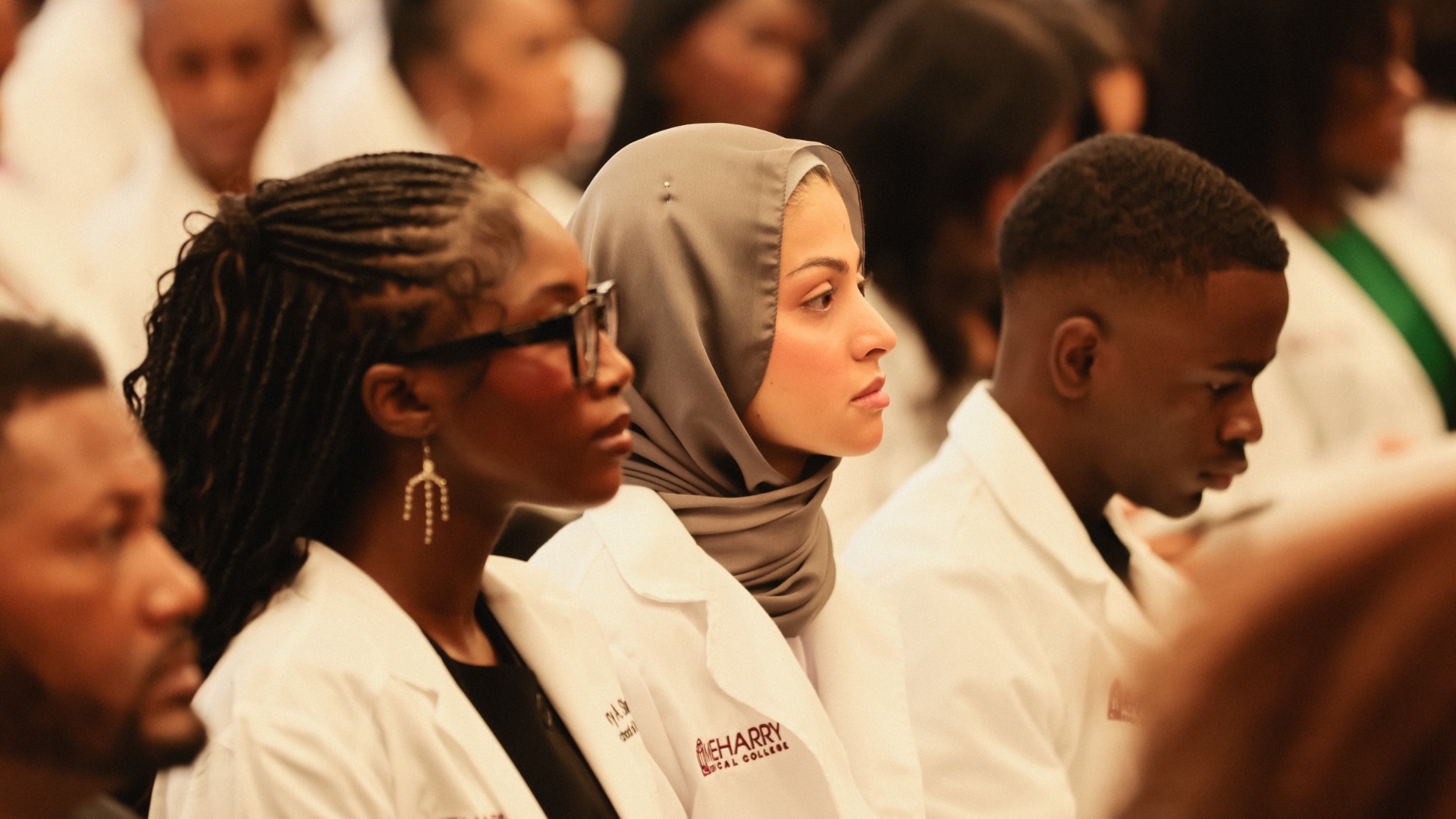
Held in the Harold D. West Basic Science Building, the annual event brought together medical students, faculty, research mentors, judges, panelists and guests for a day of scientific exchange and learning. Students shared research spanning basic science, clinical research, public health and community-engaged research through poster and oral presentations.
Student Research Day has a long and meaningful history at Meharry, dating to 1956. The event gives students an opportunity to share research conducted at Meharry and institutions across the country, according to the program booklet. For some students, Research Day marked their first opportunity to formally present their work. For others, it represented another step toward careers as physicians, scientists, or physician-scientists.
This year’s program highlighted the translational research continuum and connections among discovery, clinical care and community, according to the program committee. Throughout the day, students presented their research, made connections and shared their work with members of the Meharry community and guests.
The program began with a welcome from Stephania Miller-Hughes, Ph.D., M.S., MSCI, followed by opening remarks from Anil Shanker, M.S., Ph.D. Miller-Hughes serves as assistant dean of research for the School of Medicine and professor in the Department of Surgery. Shanker is senior vice president for research and innovation at Meharry.
Following the opening program, students participated in a morning poster session showcasing their research.
The morning continued with the keynote address, “Connecting Discovery, Care, and Community: The Power of Translational Science,” delivered by Karen Winkfield, M.D., Ph.D.
Eight students delivered oral research presentations: Mohamed Atamna, Olivia Evans, Samuel Ademisoje, Kelechi Ajoku, Sebastien Nicolas, Mehul Satish Prabhu, Shanika Francis and Niyati Pathak. LaMonica Stewart, Ph.D., served as moderator for the oral presentations. Stewart is a professor in Meharry’s Department of Biochemistry, Cancer Biology, Neuroscience and Pharmacology.
The afternoon also featured a physician-scientist panel with Leslie Appiah, M.D.; Sanford Barsky, M.D.; Karen Winkfield, M.D., Ph.D.
; and Ebele Umeukeje, M.D. Chandravanu “CV” Dash, Ph.D., served as moderator.
Yvette Burgess, MBA, program coordinator for the Center of Excellence for Clinical & Translational Research at Meharry Medical College, served as program facilitator for the event.
Meharry Medical Student Research Day 2026 was organized by a committee composed of Stephania Miller-Hughes, Ph.D., M.S., MSCI; Malinda Bronaugh-Owens, MBA, MS; Minu Chaudhuri, Ph.D., MS; Dana Marshall, Ph.D., MS; and Byeongwoon Song, Ph.D.
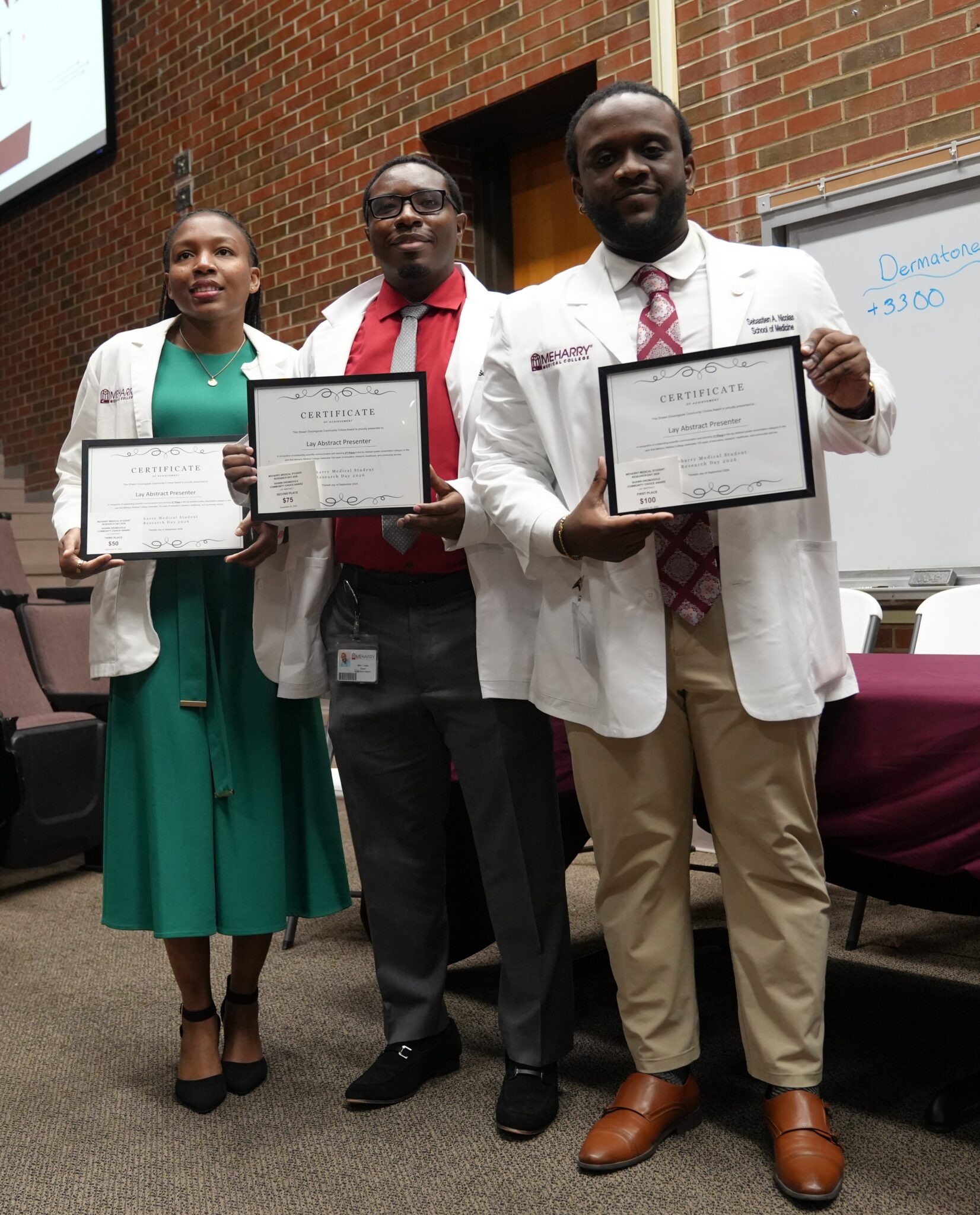
Student Research Day concluded with an awards ceremony recognizing students for outstanding oral and poster presentations as well as recipients of the Dromgoole Community Choice Awards.
According to the program booklet, the Meharry Community Engagement Core’s Community Choice Award was recently renamed the Dromgoole Community Choice Award in honor of Shawn Marcus Dromgoole II, a former member of the Meharry Community Engagement Core Community Advisory Board who died unexpectedly in February 2026. Dromgoole founded More Than a Walk, a nonprofit organization dedicated to helping individuals connect and stay active.
Students presenting lay research abstracts during Student Research Day were eligible for the Dromgoole Community Choice Award.
Community judges for the Dromgoole Community Choice Award, Kennetha Patterson, Kristin Mejia, Elois Freeman and Latoya Alexander, helped select the winners.
The School of Medicine is proud of the students who presented their work and the curiosity, persistence and commitment reflected in their research. Their work continues Meharry’s longstanding tradition of scholarship and discovery while demonstrating the potential of research to improve health and the lives of individuals and communities.
2026 Meharry Medical Student Research Day Winners
Oral Presentations
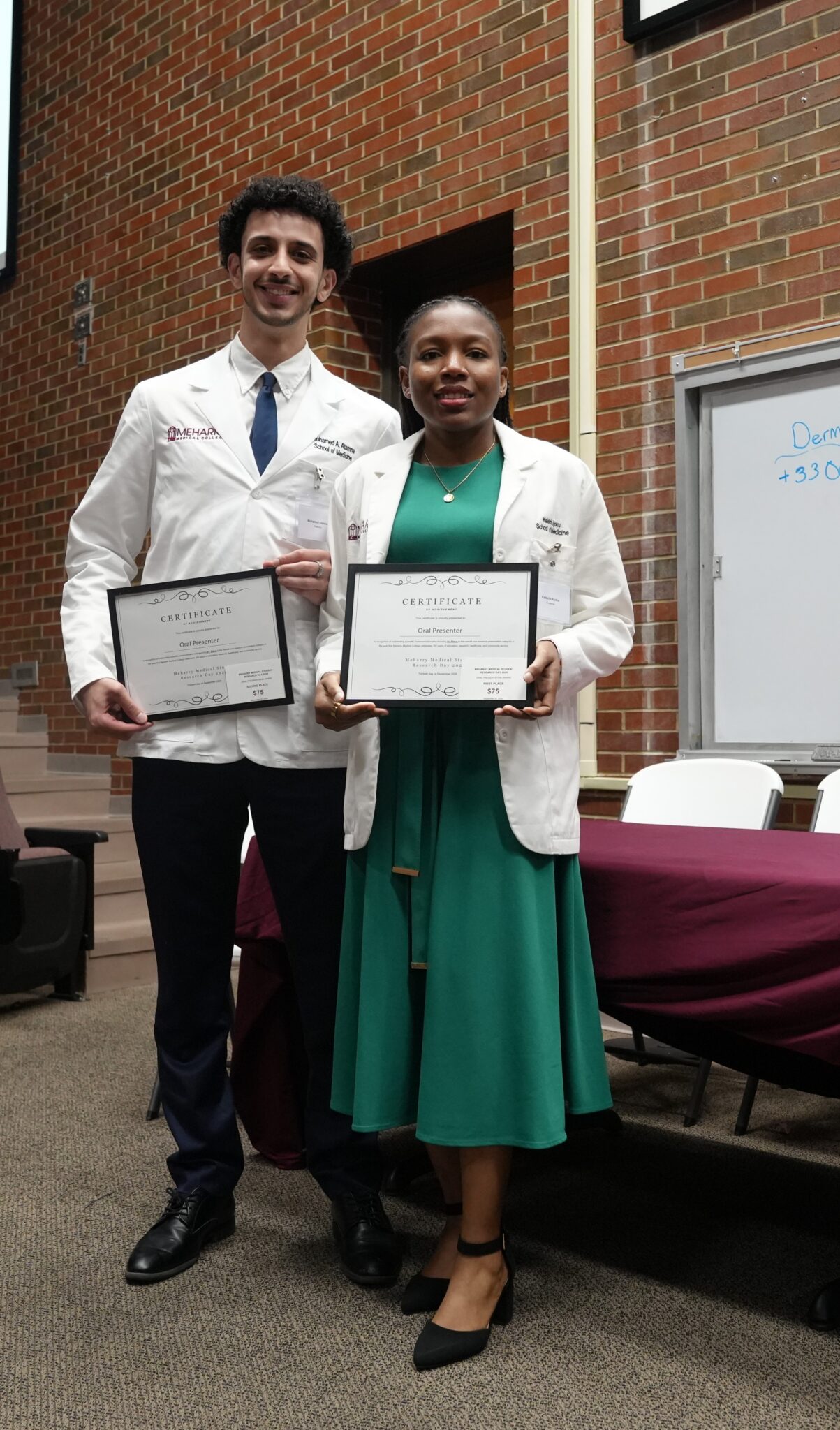
First Place: Kelechi Ajoku
INSUFFICIENT NEURORADIOLOGY REPORTS LIMIT LONGITUDINAL ASSESSMENT OF INFARCT-LIKE LESIONS IN SICKLE CELL ANEMIA
Second Place: Mohamed Atamna
UNDERSTANDING GLAUCOMA THROUGH IMAGING CHANGES IN OPTIC NERVE CHARACTERISTICS
Poster Presentations — Basic Science
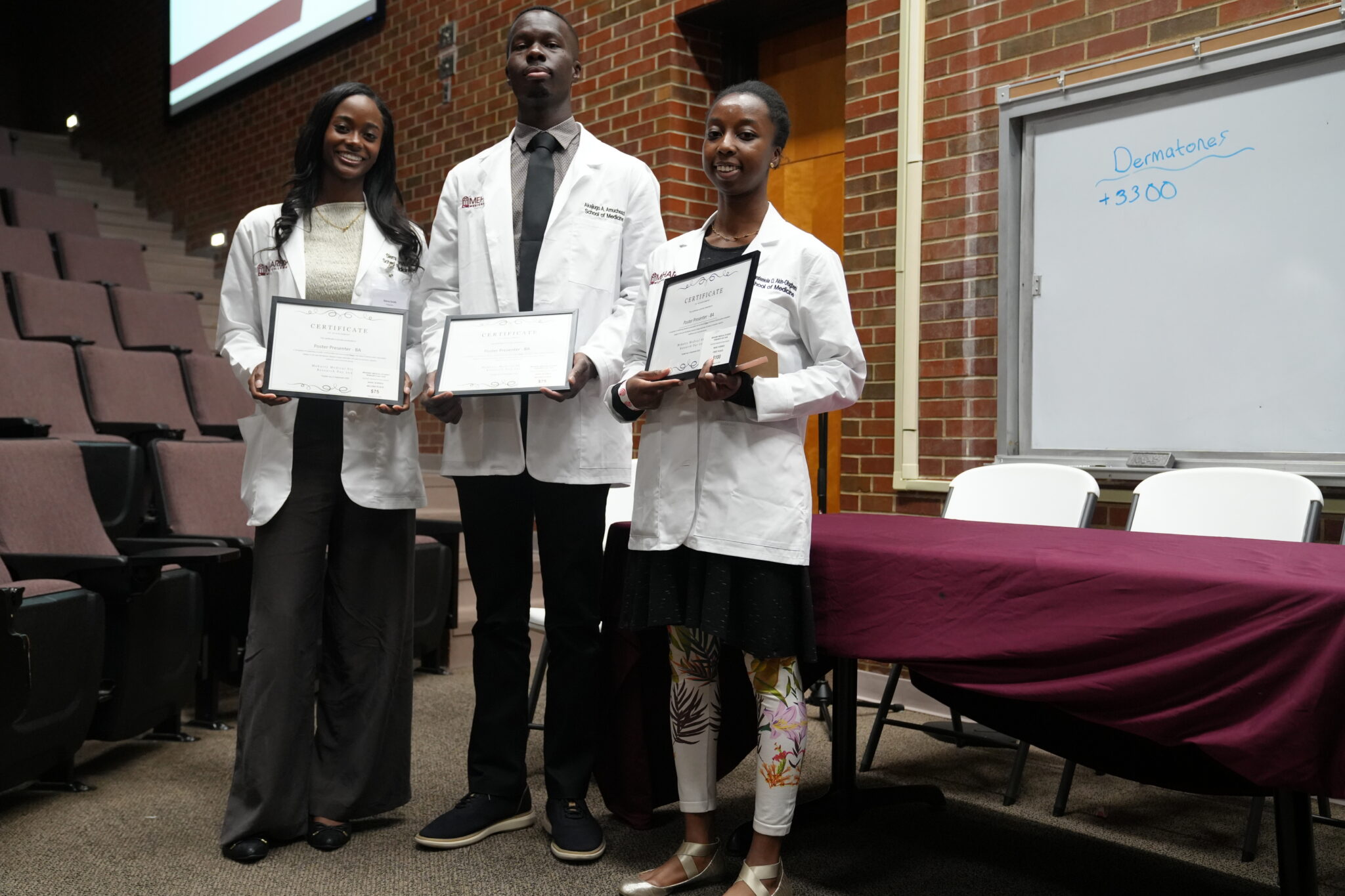
First Place: Oluwateniola Akin-Olugbemi
Characterization of Bile Acid Metabolism in the Developing and Adult Retina
Second Place: Akajiugo Amucheazi
Trancriptonomic Analysis of Cervical Cancer Reveals Enhanced proliferation and loss of squamous and epithelial differentiation
Second Place: Sierra Smith
INVESTIGATING THE ROLE OF TGF-Β SIGNALING IN IMPDH-MEDIATED REGULATION OF ADIPOSE PROGENITOR CELL FATE
Poster Presentations — Clinical Research
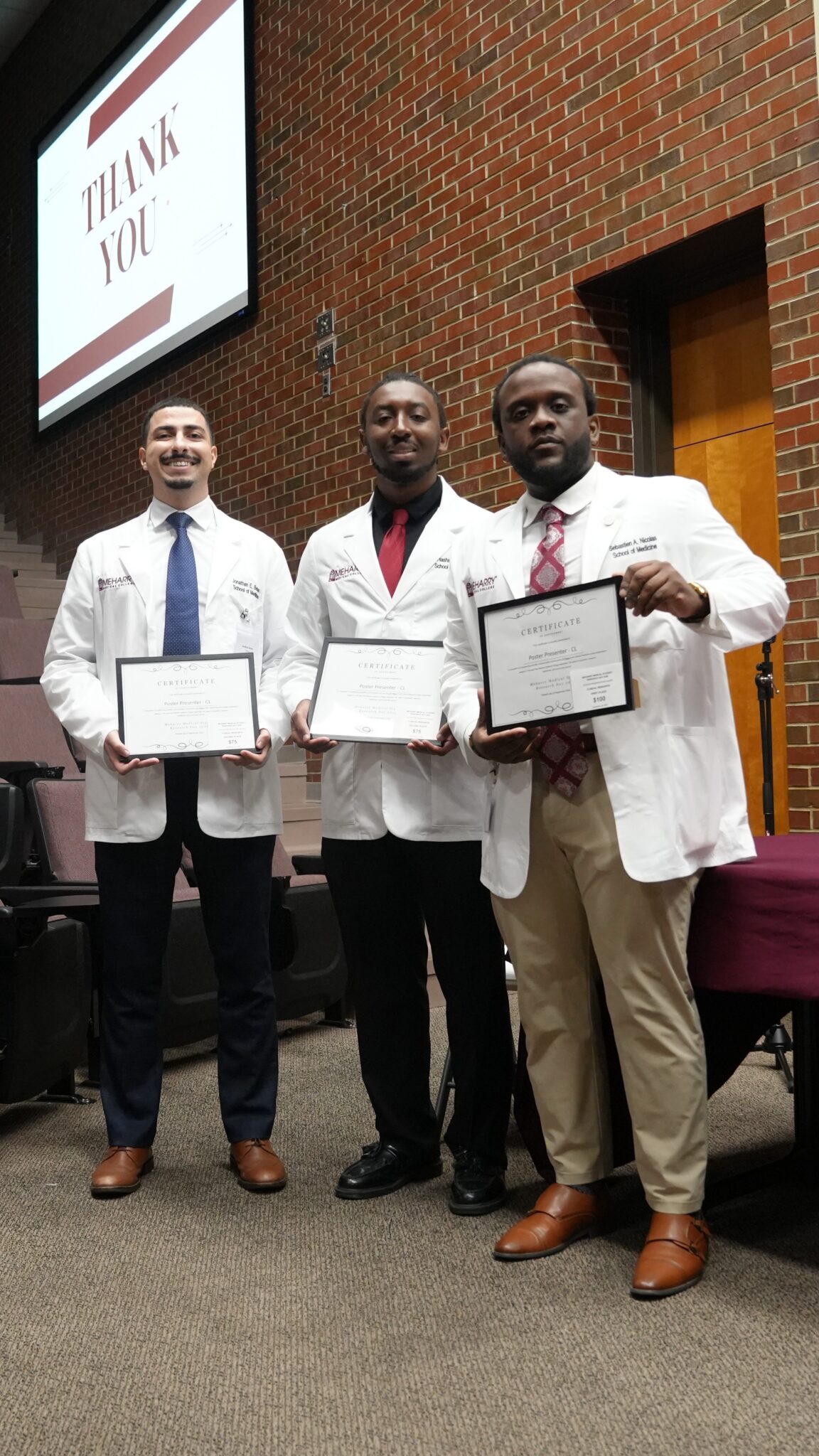
First Place: Sebastien Nicholas
SOCIODEMOGRAPHIC DETERMINANTS OF COCHLEAR IMPLANT DEVICE ADHERENCE IN ADULTS
Second Place: Hashim Bangura
DISENTANGLING RELATIONSHIPS BETWEEN NIGHTMARES, INSOMNIA-RELATED SYMPTOMS, AND TRAUMA-RELATED DISORDERS IN YOUTH
Second Place: Johnathan Bertan
RADIOGRAPHIC PREDICTORS OF STRESS SHIELDING AFTER REVERSE TOTAL SHOULDER ARTHROPLASTY
Poster Presentations — Public Health, Community-Engaged, and Other
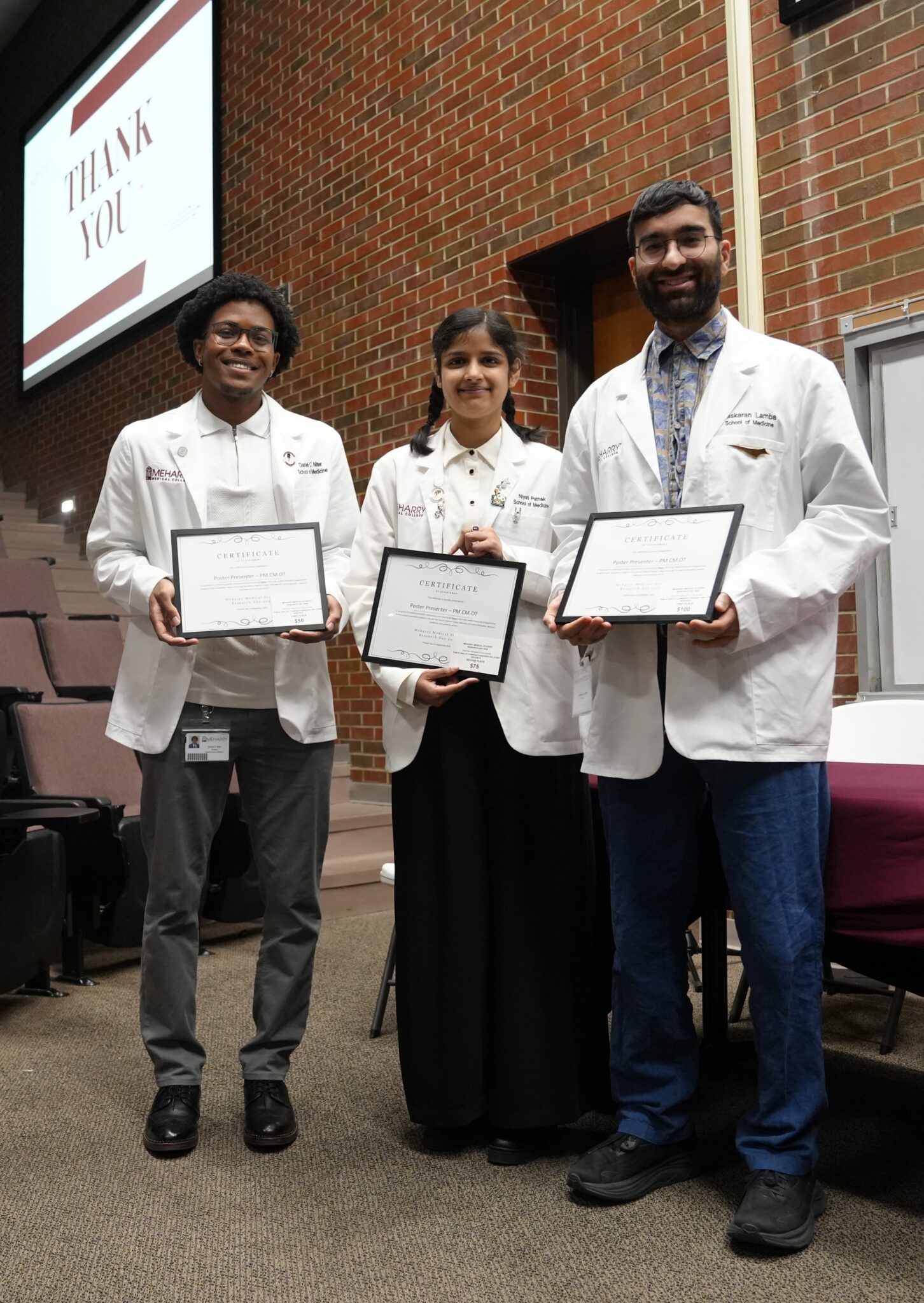
First Place: Jasakaran Lamba
SEXUAL SIDE EFFECTS ASSOCIATED WITH CHILD AND ADOLESCENT SELECTIVE SEROTONIN REUPTAKE INHIBITOR USE: A SYSTEMATIC REVIEW
Second Place: Niyati Pathak
BASELINE DIETARY GUIDELINE ADHERENCE AND BLOOD PRESSURE CONTROL IN THE TLIP STUDY: A CROSS-SECTIONAL ANALYSIS
Third Place: Daniel Niter
MOTIVATIONAL INTERVIEWING TO IMPROVE DIETARY SALT ADHERENCE AND BLOOD PRESSURE CONTROL AMONG ADULTS WITH CHRONIC KIDNEY DISEASE AND HYPERTENSION: A SYSTEMATIC REVIEW
Dromgoole Community Choice Awards
First Place: Sebastien Nicolas
WHAT PERSONAL FACTORS AFFECT COCHLEAR IMPLANT USE IN ADULTS?
Second Place: Marc Lewis
TRIVERSITY SEVERITY SCORE LINKED TO RESPIRATORY FAILURE AND DEATH IN PEOPLE WITH PNEUMONIA
Third Place: Kelechi Ajoku
BRAIN SCAN REPORTS DO NOT CLEARLY TRACK CHANGES IN STROKE-LIKE LESIONS IN SICKLE CELL ANEMIA