
150th Anniversary Keynote Message
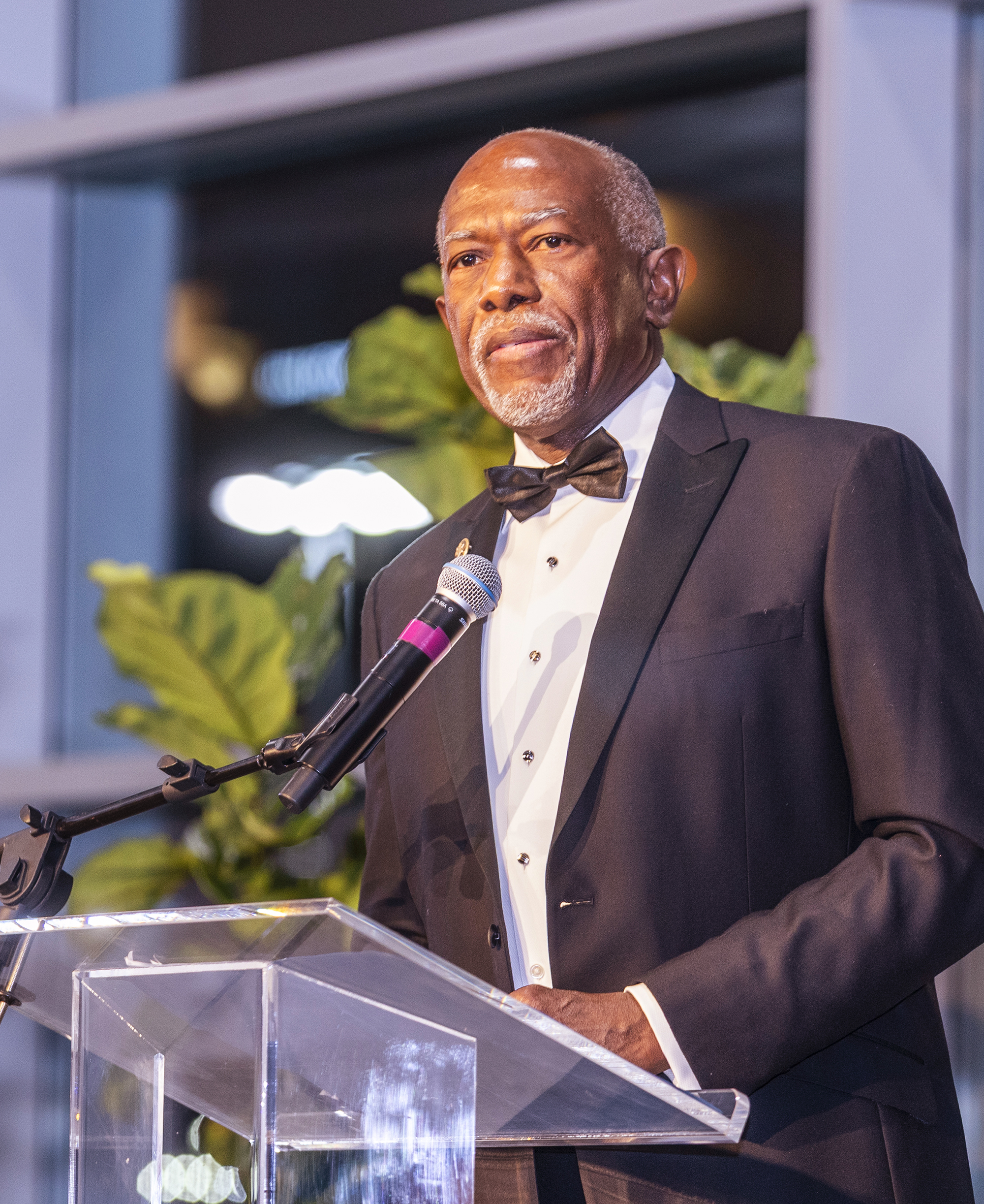
M.D., Johns Hopkins School of Medicine
Ph.D., Oxford University
B.A., Harvard University.
On Friday, October 24, 2026, community, corporate and political leaders; alumni; administrators; faculty; students and friends of Meharry Medical College gathered at Nissan Stadium for a gala celebrating the institution’s sesquicentennial, or 150 years of ”Worship of God Through Service to Mankind.” Amid remarks and performances for the occasion, the keynote message of the evening was delivered by Meharry’s president and CEO, Dr. James E.K. Hildreth. Here are the remarks as they were prepared for delivery.
Good evening—I’m Dr. James E.K. Hildreth, and I’m proud to be the president of Meharry Medical College on the occasion of its 150th anniversary. It is a milestone worthy of this celebration this evening. All of you look so good in your finery, and I am indeed glad—proud—to stand before you here tonight to share in this celebration, observing 150 years of the shining achievements of Meharry Medical College.
I want to extend a special thanks this evening to Councilmember Brandon Taylor and the members of the Minority Caucus, who have always been so supportive of Meharry and today put forth a special proclamation in the City Council recognizing our 150th anniversary celebration.
As leaders who walk the halls of our government with the same spirit of resilience that built this institution, the Minority Caucus understands that Meharry’s legacy is not merely a chapter in Nashville’s history, it is a pillar of its soul. Their support reminds us that when we uplift our historically Black institutions, we light the way of justice, healing and excellence for the entire city.
That same commitment to Metro Nashville’s future is shared by our city’s top leader. That is why it is especially appropriate to have our Mayor, Freddie O’Connell, here with us this evening for our celebration of all that Meharry—and generations of Meharrians—have contributed to this city and nation for over a century and a half.
As the Mayor just announced, he formally informed our board this morning that next week, he will announce a work team to advance planning for a new future for Nashville General Hospital, our critical partner and index hospital.
Mayor O’Connell has committed that NGH and Meharry will be part of that planning group. The need is urgent, and we stand ready to begin this vital work.
We all look forward to the public announcement of this news next week. But on this special night, I want to applaud his commitment, and say thank you, Mayor O’Connell. We are ready to work with you on our shared future.
You know, Meharry Medical College’s motto, first carved in stone in the front of the old hospital, is “Worship of God through service to mankind.” This institution officially bonded itself to its spiritual beginnings from the beginning. It was born of an act of faith.
In Hebrews 11, it tells us “Faith is the substance of things hoped for, the evidence of things not seen.”
By faith, it says, “we understand that the worlds were framed by the word of God.”
By faith, Abraham, “sojourned in the land of promise.”
By faith, men and women of scripture “subdued kingdoms, wrought righteousness, obtained promises…out of weakness were made strong.”
By faith…
Over the ages, dedicated men and women have achieved much by faith, and so tonight, I submit this to you:
By faith, Samuel Meharry made a promise to a Black man who helped Samuel free a wagon on a lonely Kentucky road.
By faith, some decades later, Samuel and his brothers made good on that promise, sewing the seed money to form the Meharry Medical Department of Central Tennessee College here in Nashville.
By faith, two men from opposing sides of what had been a costly, brutal, deadly civil war—Confederate surgeon-later-Vanderbilt professor William Sneed and New Englander and Union chaplain-turned-physician George W. Hubbard—pledged what many in the South at the time thought to be an absurd idea: to educate newly freed slaves to become doctors.
By faith, 11 Black students—mostly former slaves themselves—began meeting in the basement of a Nashville Methodist church to learn how to heal others—and became the forerunners of thousands of Meharrians to follow.
By faith…
I honestly wonder if our own founders dared look ahead this far, 150 years hence? Did they see us in their mind’s eye?
It’s a worthy question.
Do you think they realized what the faith of our founders would achieve?
Did they imagine how far their legacy would reach?
The thousands of health care laborers this place would send out into an uncertain world?
The countless lives that they would directly or indirectly save across a nation?
Even across the seas?
This is our Meharry, imagined by them. This is our history—the details of which every Meharrian carries in their metaphoric DNA. This is at the root of who we are as Meharrians.
In the midst of social change, economic challenges, civic upheaval, those who have gone before us as products of this small but mighty institution have remained true to the mission of Meharry, serving all who require care. They have remained, much as James Weldon Johnson wrote in 1900 in “Lift Every Voice and Sing,” forever on the path.
Every Meharrian who has crossed the stage at graduation has left a witness of themselves with the institution in one way or another.
Like Dr. Robert F. Boyd, who some have called the greatest Meharrian of the 19th century and founder of Nashville’s first Black-owned private medical practice.
Or, Dr. Georgia Esther Lee Patton Washington, the first female Meharry graduate and the first Black woman licensed to practice medicine in Tennessee.
Or, Dr. Dorothy Brown, the first Black woman surgeon in the South.
Or Dr. D.B. Todd Jr., the first Black cardiovascular surgeon to practice in Nashville and the leader of the surgical team who 54 years ago performed Meharry’s first open-heart surgery.
Or the many other Meharrians who in their own way have distinguished themselves in communities across the nation and around the world.
I could continue to list distinguished Meharrians for the rest of the night. These sons and daughters of Meharry have literally prepared the ground and established that metaphorical path for those who have followed. Fifteen decades of lifesaving, world-changing service to underserved communities, to individuals who needed to be made whole.
For the better part of that 15 decades, only two medical schools—Meharry and Howard in D.C.—managed to train the proportionately few Black physicians entering the world to care for the underserved. Even now Black physicians—or Black dentists—make up only around five percent—one in 20—of all practicing as physicians or dentists.
Ask some older alumni and professors who grew up in the deep South and they will tell you that as small children they remember the white community physician who reserved nights and weekends to make house calls on Black patients.
One Meharry alumna recalled those Friday nights in her childhood Southern town when the Black patients in the city would line up around the block to see the town’s one physician who was white. It was memories like these that provoked those Meharrians to become physicians themselves to care for their communities.
Ask some of our Meharry colleagues who have been around for a while and they will tell you that while growing up they didn’t see one Black physician until they were adults. Personally, growing up in Arkansas, I don’t recall seeing a Black physician until I attended Johns Hopkins—and, when I first visited Meharry in 2004, I saw so many people who looked like me in white coats doing amazing things. Meharry changed my life.
But the need for Black health care professionals is so great even now. It is a simple fact that patients of color inevitably show better results when they are treated by health providers that look like them, who are more aware of social or economic or even genetic determinants of health, who are familiar with the concerns of Black families and are more in tune with those in underserved communities.
Meharry Medical College is arguably the nation’s leading educator of Black physicians, dentists, researchers and public health professionals, and we’re proud of that. For 150 years, we and our alumni have been at the forefront of health care for not only Black Americans, but for underserved patients worldwide. When, for whatever reason, society has turned its back on the vulnerable in both urban and rural settings, Meharrians have stepped into the gap.
Meharry’s perspective in American health care is as important now than ever. In the current political climate, simply expressing this perspective as a college president can make you the focus of malicious scowling from the highest level. We have been threatened with budget and grant cuts. We have seen foreign students concerned about their future in America. And that’s why we have to be brave in speaking truth to power. We only have the rights that we choose to defend, and we have to be willing to speak up and confront the outrageous.
Over the last 10 years, Meharry stepped up while others stepped back. Our mission and work took the national and international spotlight.
Our program to gather genomic data from people of African descent worldwide to benefit more inclusive research has garnered the support of major pharmaceutical corporations.
Our data science and artificial intelligence programs are novel for a health sciences institution like ours.
Our School of Global Health—the only one of its kind in the U.S.—addresses health equity and health policy from legal and political perspectives that many schools similar to ours are ill-equipped to approach.
These initiatives have been embraced with unprecedented funding and support and the faith of business and scientific leaders. And Meharry Medical College is recognized in the halls of government both locally and nationally for the initiatives we have set forth.
Among HBCUs, Meharry stands out because we’ve done these things. When you show others you can do something—a big thing—then they have confidence that you can do other big things.
To continue to grow programs to meet the challenges of the next 150 years, we have boldly committed ourselves to a half-billion-dollar drive—Campaign 150—to stretch our tent pegs by supporting scholarships, reducing debt, funding research and expanding facilities. Many in this room have supported Campaign 150, providing essential momentum to bring us this far. I want to thank you for that.
This coming May, as we do every year, we will continue to send forth new physicians, dentists, researchers, physician assistants, data specialists and public health professionals to engage the world and bring about better outcomes for the communities they serve—providers who are trained to meet their patients one human to another in much the same way Meharrians before them have done.
The tools may change over time, the technical sophistication may evolve, but individual health caring is and ever should be eye-to-eye. Personal and intimate. And delivered to communities of color by health professionals that look like them.
This is the work of Meharrians now and into the future.
And, tonight, this invites us to stand and look ahead through time just as Hubbard and Sneed and Boyd and Patton and any one of those first 11 students wondered what would become of this institution that dared to plant itself in the same Southern soil their progenitors had toiled in. Tonight begs this question: “Where do we go from here?”
The political and social climate is hard—but it has been hard before. Meharrians and supporters, we have weathered tougher times and we have come through stronger, shining brighter.
Ahead are challenges to solve in health policy—and we will solve them.
Ahead are new discoveries from groundbreaking research—and we will make them.
Ahead are afflicted and sick multitudes who need healing—and we will heal them.
Health equity in America is still unfinished business—and I believe the Meharry of today and the Meharrians of tomorrow will help bring it to fruition.
Ladies and gentlemen here this evening, this is why 150 years of Meharry Medical College is such an amazing milestone. And this is why we must be here for 150 more. And this is why your support is so important to our mission and to the nation’s health care needs.
We feel it all around us. The spirits of Meharrians – from the very first to now – line the hallways of our buildings and classrooms. They extend from the homes where they were raised to the communities where they cared for their last patient. Their voices continue to speak through subsequent generations of Meharrians who have taken up the same mantle, to worship God through their service to mankind. The path that we have spoken of all night now lies before us. We are, have been, and shall be forever on that path.
Alumni, supporters, leaders, teachers, friends—all of you—stay faithful to this cause. There is an amazing future ahead.
Walk with us—forever, forever on the path!.
May God bless all of you here tonight, and May God continue to bless Meharry Medical College.