
- Programs Overview
- Admissions and Aid
- About Us
- Research
- Research Labs and Funded Projects
- Genomics Lab
- Human Digital Twin Lab
- Cybersecurity Research Center
- Multimodal Environments for Twin Research & Immersive eXperiences
- Population Health Informatics and Disparities Research Lab (PHIDL)
- Intelligent Cognitive Profiling Lab (ICP)
- Geographic Information Systems and Visualization Lab
- Data-driven Intelligence and Security for Cyber-physical Systems (DISCS) Lab
- Clinical Trials and Outcomes Innovation Lab
- SACS Cyber-AI for Sustainable Planetary Ecosystem Resilience (CASPER)
- CAP: Capacity Building for Trustworthy AI in Medical Systems (TAIMS)
- Maternal Health Informatics and Disparities (HRSA Grant UR650342)
- Publications
- Collaborate with us
- Advanced Computing and Analytics Laboratory
- Faculty Grant Proposals
- Research Services
- Resources
- Research Labs and Funded Projects
- Departments
- News and Events
- Student Professional Development
Human Digital Twin Lab

Overview
The Human Digital Twin Lab is dedicated to developing the next-generation, patient-centered computational models that represent the human body across multiple biological and behavioral scales. Our work integrates artificial intelligence, bioinformatics, and high-performance computing to construct dynamic digital representations of individuals, enabling personalized, predictive, and preventive health care.
At the core of our approach is a multi-scale, multi-layer digital twin framework that captures processes from cellular and molecular activity to organ systems, whole-body physiology, and mental and behavioral states. This unified representation evolves continuously through real-time data integration and advanced modeling.
Vision
To transform healthcare from reactive treatment to proactive, personalized care through continuously evolving human digital twins.
Mission
To design scalable, explainable, and clinically actionable digital twin systems that improve communication, decision-making, and health outcomes across diverse populations.
Director and Founder
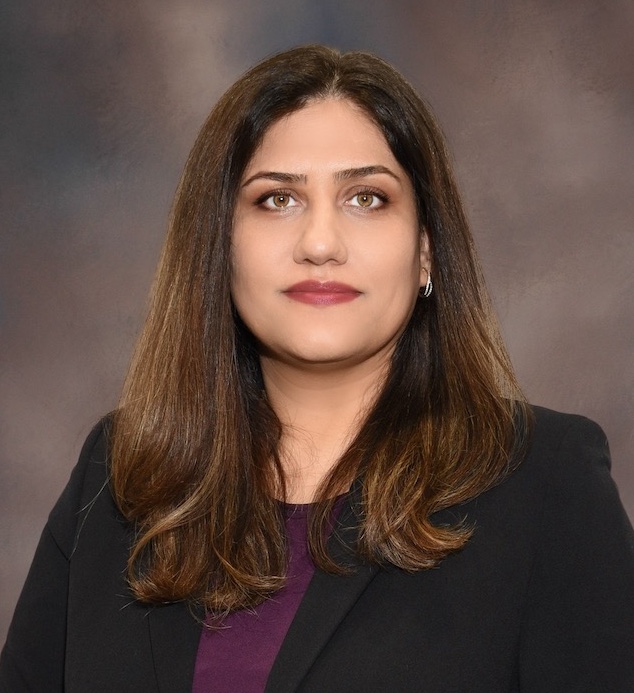
Somayeh Bakhtiari Ramezani, Ph.D.
Assistant Professor of Computer Science and Data Science
Human Digital Twin Team
Our Human Digital Twin operates across four interconnected layers:
1. Cellular and Molecular Layer
- Integration of molecular data and microenvironmental context, including signaling, metabolism, and cell–cell interactions
- Genomics, proteomics, and metabolic pathways
- Cell-state transitions and responses to physiological changes and therapeutic interventions
- Alignment with organ and whole-body layers to support consistent multi-scale digital twin modeling
Mohammad (MD) Kamruzzaman, Ph.D.
Assistant Professor of Computer Science and Data Science
md.kamruzzaman@mmc.edu
2. Organ and System Layer
- Organ-specific models with physiological interactions
- Dynamic modeling of disease progression and treatment response
- Integration of imaging, clinical measurements, and diagnostics
Somayeh Bakhtiari Ramezani, Ph.D.
Assistant Professor of Computer Science and Data Science
somayeh.bakhtiariramezani@mmc.edu
3. Whole-Body Layer
- System-wide interaction of organs and physiological systems
- Longitudinal tracking of patient trajectories
- Predictive modeling of risk and outcomes
Somayeh Bakhtiari Ramezani, Ph.D.
Assistant Professor of Computer Science and Data Science
somayeh.bakhtiariramezani@mmc.edu
Mohammad Mahmudur Rahman Khan, Ph.D.
Assistant Professor, Computer Science and Data Science
mohammadmahmudurrahman.khan@mmc.edu
Nazirah Mohd Khairi, Ph.D.
Assistant Professor of Biomedical Data Science
nazirah.mohdkhairi@mmc.edu
4. Mental and Behavioral Layer
- Cognitive and emotional state modeling
- Behavioral patterns and lifestyle factors
- Integration of patient-reported outcomes and wearable data
Somayeh Bakhtiari Ramezani, Ph.D.
Assistant Professor of Computer Science and Data Science
somayeh.bakhtiariramezani@mmc.edu
Agent-Based Healthcare Team
Patient-Side Agents
- Continuous learning of patient preferences, behaviors, and conditions
- Integrating data from wearable devices, sensors, and medical records
- Providing personalized insights and recommendations
Somayeh Bakhtiari Ramezani, Ph.D.
Assistant Professor of Computer Science and Data Science
somayeh.bakhtiariramezani@mmc.edu
Provider-Side Agents
- Domain-specific clinical AI agents (e.g., cardiology, oncology, primary care)
- Deliver tailored, context-aware clinical summaries
- Support decision-making with explainable AI outputs
- Communication between Providers’ agents for automated referral generation
Communication Layer
- Intelligent agents mediate interactions between patients and providers
- Translate complex data into actionable insights for both sides
- Reduce miscommunication and improve care coordination
Somayeh Bakhtiari Ramezani, Ph.D.
Assistant Professor of Computer Science and Data Science
somayeh.bakhtiariramezani@mmc.edu
Security, Privacy, and Trusted Communications
- Secure Storage of Human Digital Twins
- Secure Agent-to-Agent Communication
- Resilience and Risk Management
Asmah Muallem, Ph.D.
Assistant Professor of Computer Science and Data Science
asmah.muallem@mmc.edu
Students
Brian Strong, MSDS ’25
Data Science Ph.D. student
Contact and Collaboration
We welcome collaborations across academia, health care systems, and industry partners interested in advancing personalized and intelligent health care systems.
- Programs Overview
- Admissions and Aid
- About Us
- Research
- Research Labs and Funded Projects
- Genomics Lab
- Human Digital Twin Lab
- Cybersecurity Research Center
- Multimodal Environments for Twin Research & Immersive eXperiences
- Population Health Informatics and Disparities Research Lab (PHIDL)
- Intelligent Cognitive Profiling Lab (ICP)
- Geographic Information Systems and Visualization Lab
- Data-driven Intelligence and Security for Cyber-physical Systems (DISCS) Lab
- Clinical Trials and Outcomes Innovation Lab
- SACS Cyber-AI for Sustainable Planetary Ecosystem Resilience (CASPER)
- CAP: Capacity Building for Trustworthy AI in Medical Systems (TAIMS)
- Maternal Health Informatics and Disparities (HRSA Grant UR650342)
- Publications
- Collaborate with us
- Advanced Computing and Analytics Laboratory
- Faculty Grant Proposals
- Research Services
- Resources
- Research Labs and Funded Projects
- Departments
- News and Events
- Student Professional Development