Medical researchers work in the smallest units of life — cells, molecules, data. Yet every discovery carries a bigger question: How could this actually help patients?
At Meharry Medical College, where researchers are pushing ahead in precision medicine, that question doesn’t end with publication. Between the labs and the lives waiting for results lies a side of modern research most people never see. Ideas must be protected, proven again, and handed off to someone willing to take the next risk: a company, a startup, or a federal funder like NIH.
“Positioning Meharry at the forefront of 21st-century research and innovation is our foremost agenda,” said Dr. James E.K. Hildreth, the college’s president and CEO.
The rules of research are changing
For years, faculty have built careers around discoveries and grant cycles: finding something novel, proving it, publishing results, applying for funding. Now professional impact increasingly depends on whether a novel idea or invention is disclosed early, survives the next proof points, and ultimately reaches patients.
“It’s no longer enough to just publish,” said Dr. Anil Shanker, Senior Vice President for Research and Innovation at Meharry. “Nurturing comprehensive research talent at community-rooted health sciences institutions is a necessity — not a luxury. We’re building pathways that align researchers’ and students’ strengths with high-impact opportunities and backing their pursuit of transformative ideas.”
The Tennessee Technology Advancement Consortium (TTAC), backed by Launch Tennessee, is fueling that shift at Meharry, focused on researchers in the middle stage — after early results but before large grants, partners, or clinical trials.
That’s where Evelina Naish works. As Meharry’s commercialization counselor and NSF I-Corps program manager, she meets researchers when a promising idea faces its first real market test.
“A lot of researchers come in thinking they just need more data,” said Naish, whose new role at the college is funded by the NSF and TTAC. “What they often need is to talk through their idea and figure out what it is and what it isn’t.”
Naish, Shanker, and other staff in the Meharry Office of Research and Innovation now connect with researchers earlier, helping them decide what to prove, what to protect, and who else needs to be in the room.
Those conversations happen in different settings, from formal meetings to low-pressure social gatherings where Meharry scientists and staff can gain insight through informal exchanges.
But not every researcher comes to the college’s research office with a blank slate. Some arrive with decades of experience and ideas already living between risk and readiness.
The “long shot” worth taking
HIV researcher Dr. Bindong Liu knows that territory well. When he explains his cellular approach to preventing HIV infection, he reaches for paper, sketches a cell under attack, and draws an “x” through it.
“The idea is simple. What if HIV never gets the chance to enter the cell at all?” Liu said, quick to distinguish his work from methods already in use.
“It is not PrEP,” Liu said. “PrEP targets the virus. Our strategy makes the human cell resistant to HIV infection.”
Liu came to Meharry in 2005, as the college established the Center for AIDS Health Disparities Research and joined the Tennessee Center for AIDS Research (CFAR) with nearby Vanderbilt University.
His prevention strategy shows promise in early models, but he calls it a “long shot.” For it to move to the next phase, the project will require funding for additional proof points, animal studies, and, if results hold, human trials. At this stage, the work remains in cell-based models, years and likely millions of dollars away from becoming a viable prevention approach.
Still, timing is critical. Liu is working with a patent firm to file a provisional patent before publishing more widely, since once findings move into the open unprotected, some doors close for good.
“A lot of things have good potential to be a product,” he said. “Down the road, only a handful actually become one.”
Once Liu’s work matures for tech transfer, Meharry’s office for research and innovation will partner with Meharry Medical College Ventures, Inc., a wholly owned subsidiary of the college founded in 2021, to support licensing, marketing and commercialization.
“When a researcher’s idea falls too early for large-scale federal funding but is too developed to remain purely academic, MMCV helps bridge that gap,” said CEO Reginald Holt.
For now, Liu’s work remains in that tentative space Holt described — promising, but still waiting on the evidence needed to move it further.
After the breakthrough
After a discovery shows promise, the work doesn’t get easier. It gets slower, more exacting.
Translational research is where hypotheses meet biology, regulation, and reality, and where studies must stand up under increasingly strict conditions. Many ideas stall here, not because they’re flawed, but because the evidence falls short, or the model breaks down, or the funding isn’t available.
That attrition is not failure. It’s how medical knowledge advances — through narrowing, correction, and course changes that sharpen the next attempt.
This is where the Meharry Center of Excellence for Clinical and Translational Research determines what holds up under closer scrutiny. Led by Dr. Rajbir Singh, the center oversees that process as discoveries move toward human studies.
“Meharry is prepared to translate discoveries into clinical impact by advancing research from the laboratory to human trials, tailoring studies to the unique needs of our patient population to speed adoption into care,” Singh said.
Science meets entrepreneurship
For Meharry research fellow Dr. Brock Arivett, the tough translational questions come early and by design.
Arivett arrived at the college in August 2023, joining Dr. Dorin-Bogdan Borza’s kidney disease lab with an instinct not just to discover, but to deliver.
His work lives in science, but the stakes are painfully human. Arivett studies autoimmune kidney disease in people of African descent, where it’s more common, more severe, and harder to catch.
“You can improve,” Arivett said. “But once your filtering capacity is diminished, it remains diminished. We definitely want to keep people off dialysis.”
Arivett is also working to make kidney disease easier to diagnose and track over time. Right now, that still means a physical biopsy.
“It’s very invasive,” he said. “You’re not going to be able to follow a person over years with that technique.”
So he’s focused on blood diagnostics (and eventually urine tests) that can be monitored over time, even from home. For patients with limited access to consistent care, that’s the point.
Arivett’s work reflects care shaped by biology, risk, and lived realities, not one-size-fits-all testing. During his doctoral training, he went through NSF’s national I-Corps program and learned “customer discovery.” Better known as “getting out of the lab and listening to what people actually need,” he said.
“I-Corps makes you ask ‘hair on fire’ questions, which often don’t line up with what we think,” Arivett said.
At Meharry, Launch Tennessee and TTAC have become the practical on-ramp for putting that mindset into motion. Arivett said the early funding gave him a way to start the formal disclosure process, the unglamorous paperwork that determines whether an idea has a commercial future.
And while the science he’s building is very specific, his view of its impact is not. He has a blunt phrase he uses with colleagues, only half joking.
“I’ll say, ‘So what?’” he said. “You found a little thing that does a little thing. What’s that going to do for anybody?”
That question, asked early and often, can keep research from ending at publication.
Put to the test
The shift at Meharry — from discovery alone to discovery with a defined path forward — is something few people have watched more closely than Dr. Aramandla Ramesh. As Meharry’s associate vice president for research and innovation, Ramesh has seen the institution’s focus evolve over three decades at the college.
“TTAC is accelerating the change”, he said, “giving investigators early support to test their ideas and see what might be possible before a project can stall out.”
“It’s difficult to fund a concept, but money is needed to try your idea,” Ramesh added. “You have to start somewhere.”
For researchers whose careers were built long before those pathways existed, that shift can be especially consequential.
Dr. Hua Xie is one of many Meharry scientists whose work has been shaped by decades of deep, methodical research. She has spent roughly 25 years in oral microbiology, focused on experiments and scientific documentation, not pitching or protecting her intellectual property.
Xie wasn’t trying to build a product. She was trying to solve a problem. Naish showed up and asked the question Meharry scientists are now learning to ask earlier: What would it take for someone else to use what you’ve discovered?
Xie has developed an antimicrobial peptide that can kill a specific oral pathogen linked to gum disease. What makes it different, she said, is precision. The peptide targets the harmful bacteria without wiping out everything else.
Simply put: “For dentists, they can use it. And also, we can put this in toothpaste. So people can use this at home,” Xie said.
That’s the part Naish changed. Not Xie’s science, but how she learned to talk about it and what she started to imagine it could become.
Once Xie said “toothpaste,” Naish could map next steps: Who needs to be in the room? What kind of partner would even take the call? She tracks those threads in the online Tradespace platform, logging projects, setting up introductions, and making sure the right conversations don’t disappear into the academic churn.
“Now I want to talk to everyone I can,” Xie said.
That transition didn’t happen in a pitch meeting or academic conference. It happened over snacks and small talk, when Xie’s life’s work took a surprising new direction.
“The goal is not to change what scientists investigate,” said TTAC Director Charles Layne. “As part of Launch Tennessee, we’re working to make sure more of what they discover clears the commercialization process and reaches patients, partners, and communities.”
The stakes are not limited to Meharry. A recent Life Science Tennessee report found $1.16 billion in bioscience-related academic R&D spending statewide, with bioscience accounting for 74% of all research in Tennessee.
Tennessee officials have been clear about the state’s role in moving research into the marketplace.
Deputy Governor and Commissioner of the Tennessee Department of Economic and Community Development Stuart McWhorter described the state’s job as connecting its R&D assets with industry.
“Nashville has earned its reputation as a national hub for healthcare innovation, and Meharry’s researchers are tackling real health challenges with science grounded in the experiences of the communities they serve,” McWhorter said. “Tennessee is proud to support efforts that connect cutting-edge research with industry expertise so these breakthroughs can move from the lab to the marketplace and reach the people and communities that need them most.”
TTAC’s role is to help projects clear the hurdles to that end, Layne said, so more discoveries don’t stop at publication and instead move toward the marketplace.
At Meharry, the science has always been tied to care. The difference now is not a guarantee of outcomes, but a clearer route — one that gives more discoveries a chance to move beyond the lab and toward the people who need them most.
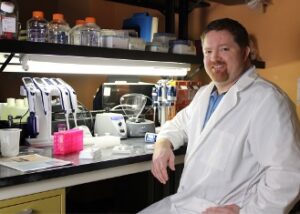
Dr. Brock Arivett
(Kidney disease + precision medicine + translation mindset)
- Role: Research Fellow
- Department: Microbiology, Immunology and Physiology
Research Focus: Autoimmune kidney disease; Membranous nephropathy; Diagnostics - Commercialization Lever: TTAC support for disclosure + early commercialization steps; national I-Corps customer discover
Delaying dialysis through earlier detection
Simpler testing and long-term monitoring for kidney patients
Kidney disease can advance quietly, pushing some patients toward dialysis before anyone sees it coming. That trajectory is what drives Dr. Brock Arivett, a Meharry Medical College research fellow studying autoimmune kidney disease in people of African descent, where the condition is more frequent and often more severe.
“You can improve. But once your filtering capacity is diminished, it remains diminished,” he said. “We’re definitely trying to keep people off dialysis.”
Arivett is working to make kidney disease easier to diagnose and track. Right now, to diagnose certain diseases, the gold standard is an invasive kidney biopsy, which is also difficult to undergo year after year. So he’s developing blood diagnostics, and eventually urine tests, that can reduce the need for repeated biopsies and allow for monitoring over time, even from home.
“Patients can take the test at home, record the result and show their physician,” Arivett said. “That’s how we make it more patient-friendly, and it makes long-term monitoring more realistic.”
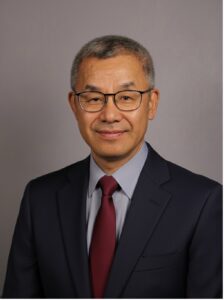
Dr. Bindong Liu
(HIV prevention + cell-entry strategy + resource gap)
- Role: Associate Professor, Tennessee Center for AIDS Research Director
- Department: Microbiology, Immunology and Physiology
- Research Focus: HIV Prevention
- Commercialization Lever: Provisional Patent in Progress
Preventing HIV in its track
Making human cells resistant to infection HIV treatment has come a long way. HIV prevention hasn’t. That gap is what drives Dr. Bindong Liu’s work.
“There’s no vaccine, no effective microbicide.”
Liu, who trained at Johns Hopkins and now leads pre-clinical HIV research at Meharry Medical College, is pursuing a strategy that flips the usual approach. Instead of targeting the virus directly, his team is working to make human cells resistant to infection.
“It is not PrEP,” Liu explained. “PrEP targets the virus. Our strategy makes the human cell resistant to infection.”
“HIV is very picky,” he said. “We block entry, not replication.”
In practice, it could one day become a microbicide, a prevention product that stops infection before it starts. That matters most in low-resource settings, especially for women, where HIV transmission often occurs through vaginal tissue.
But Liu is blunt about where the science stands right now. “This technique is a long shot. Definitely.” The work is still in early, cell-based models, and the next steps take years: testing in real human cells, then animal studies, and eventually larger trials.
That path takes more than ideas. It takes money, time, and proof. But Liu’s logic is simple and it starts at the earliest moment of infection.
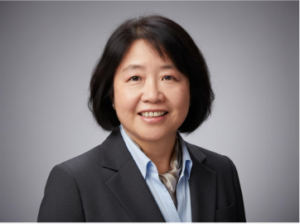
Dr. Hua Xie
(Oral microbiology + antimicrobial peptide + prevention / precision example)
- Role: Professor of Oral Biology
- Department: Oral Biology
- Research Focus: Oral microbiome; periodontal disease; pathogenic bacteria; antimicrobial peptide development
- Commercialization Lever: Granted U.S. patent + additional IP in progress; TTAC/MMCV support for disclosure and early commercialization steps; outreach to potential industry partners
A new line of defense against oral bacteria
A targeted peptide that could one day be used in toothpaste
Right now, gum disease is treated with cleanings—not a drug you can take at home. For many patients, it means returning to the dentist for cleanings as frequently as every three months.
Dr. Hua Xie, a professor of Oral Biology at Meharry Medical College, is working on a different approach: a medicine designed to target the bacteria that drives periodontal disease without wiping out everything else.
“Not all bacteria in the mouth is bad,” Xie said. “That’s why we can’t use antibiotics here,” she said. “It kills all the bacteria.”
Instead, Xie is developing a targeted treatment designed to knock out the harmful bacteria behind gum disease without wiping out the good bacteria along with it.
If the science holds up, Xie can already see where it could go: first to dental clinics, and eventually into something people use every day at home.
“For dentists, they can use it,” Xie said. “And also, we can put this in toothpaste. So people can use this at home.”