“We have to ensure AI is deployed in ways that expand opportunity and trust, rather than creating gaps in how different communities experience its impact,”
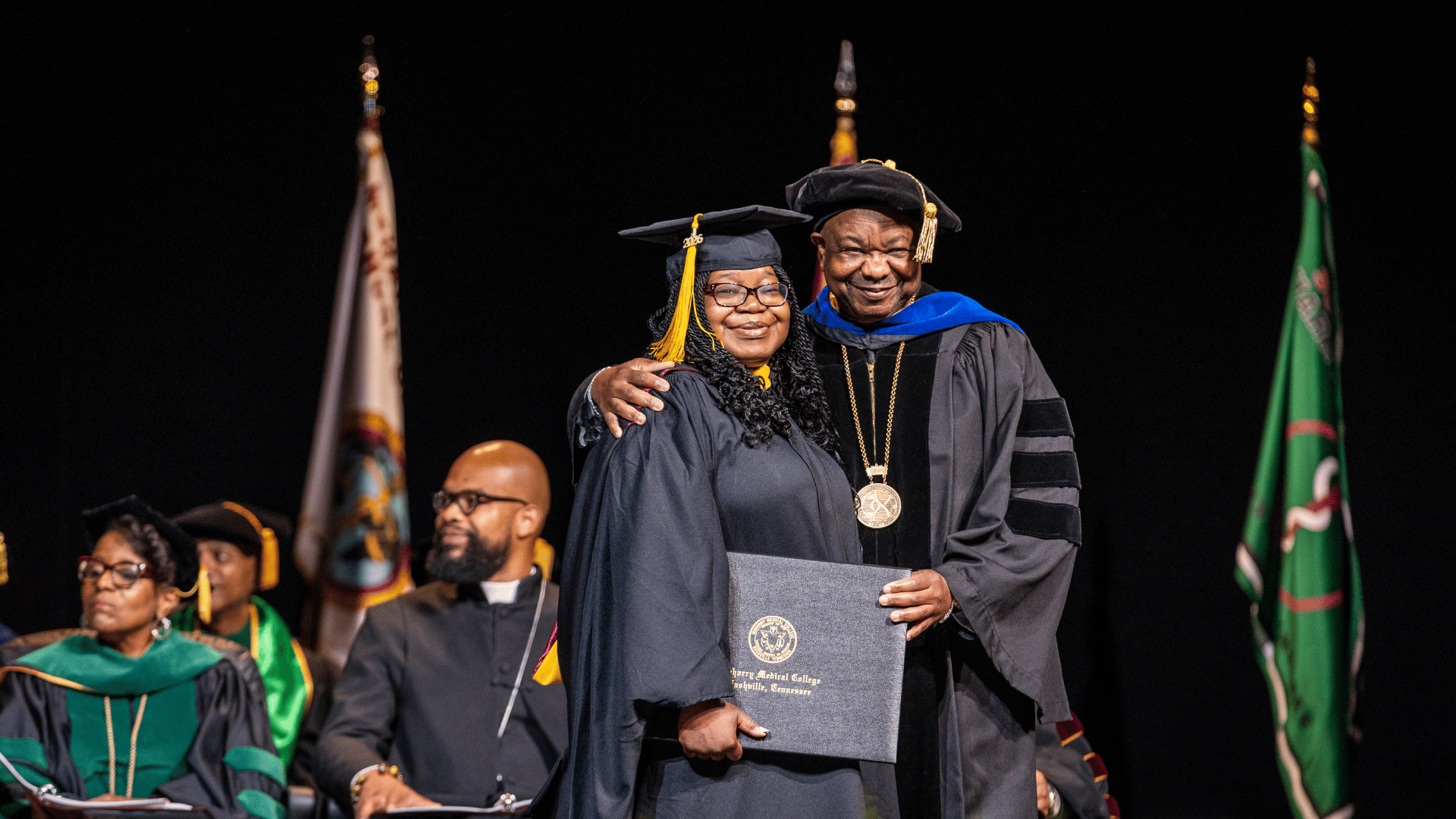
LaChiara Landrum, Ph.D. Candidate and Senior Congressional Innovation Fellow .
At Meharry SACS, we don’t just train data scientists — we train advocates. Our doctoral students arrive with technical curiosity and leave with the conviction that computational tools must serve every community, especially those that technology has historically left behind.
LaChiara Landrum is that kind of researcher. A Ph.D. candidate in the School of Applied Computational Sciences, Landrum came to Meharry with a background in finance and corporate analytics and left the lab with something far more powerful: a mission.
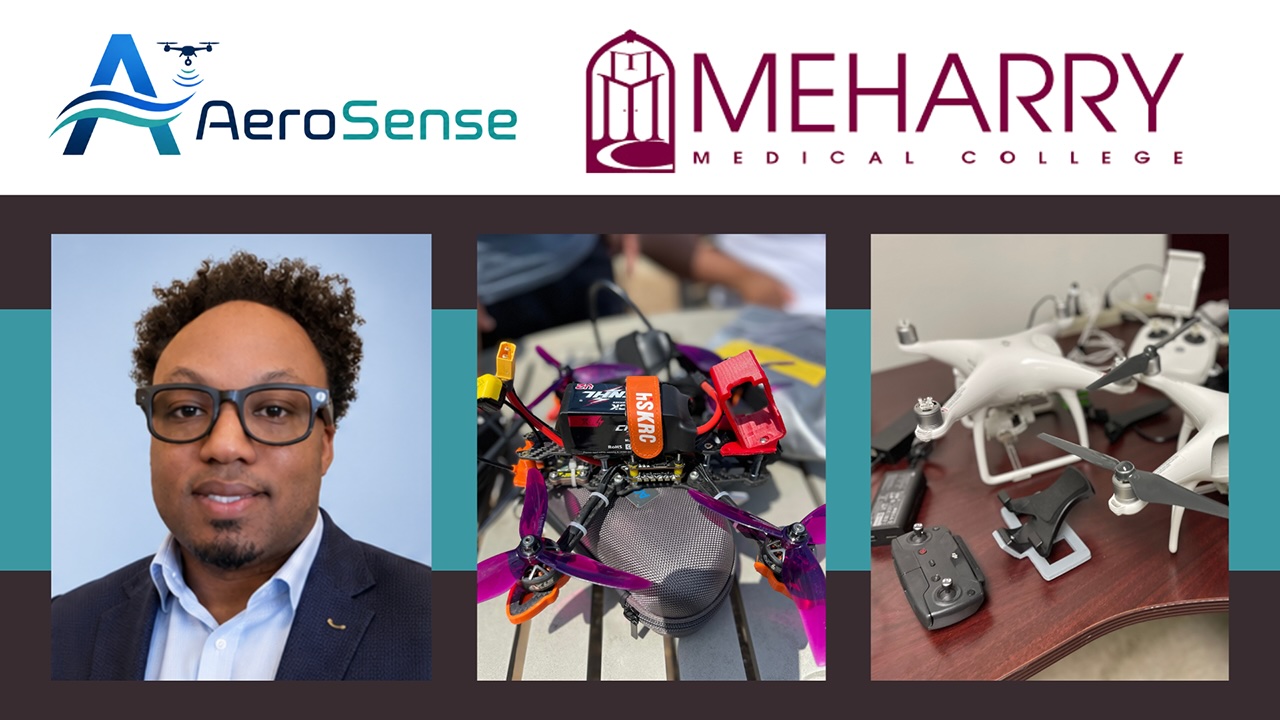
Under the mentorship of Dr. Uttam Ghosh and Dr. Puspita Chatterjee, she immersed herself in medical multimodal fusion, building AI systems that integrate patient data from imaging, vitals, audio and operational sources to support life-saving decisions in real time.
What set her research apart was its design philosophy. Rather than optimizing for ideal conditions, Landrum and her team built for the hardest ones: places like rural hospitals with no reliable internet, places affected by natural disasters, or multilingual communities where a language barrier can become a medical emergency.
Now, as one of a select group of researchers chosen as a Senior Congressional Innovation Fellow for 2026, Landrum is bringing those insights directly to Capitol Hill, where she will advise members of Congress on technology legislation. Her story illustrates what becomes possible when rigorous training meets a community that holds technology accountable to justice.
This is what mission-driven AI looks like at Meharry SACS.
What role do you believe Meharry SACS played in your selection for this fellowship?
Meharry’s School of Applied Computational Sciences played a foundational role in my selection. Coming from a finance and corporate analytics background, I entered SACS with strong quantitative skills. However, it was through this program that I recognized the critical need for medical-based data scientists who can use those skills to create meaningful impact for our communities.
SACS’s emphasis on mission-driven innovation, health equity, and real-world computational solutions reshaped my perspective as both a researcher and a practitioner. The program allowed me to apply data science and AI to challenges directly affecting underserved populations, expanding my work beyond financial systems into public health and safety. The mentorship and rigorous training I received prepared me to tackle complex technical, ethical, and policy questions.
How will your experience in the lab with Dr. Ghosh and Dr. Chatterjee researching medical multimodal fusion and public safety inform your expertise as an advisor on Capitol Hill?
“Their mentorship introduced me to the realities of designing technology for high-stakes environments, particularly where medical emergencies, operational constraints, and public safety intersect.”
LaChiara Landrum, Ph.D. candidate and Senior Congressional Innovation Fellow
My experience working on multimodal fusion and cybersecurity in the lab with Dr. Ghosh and Dr. Chatterjee was pivotal. I would not have the technical depth or interdisciplinary skillset I have today without that work. Their mentorship introduced me to the realities of designing technology for high-stakes environments, particularly where medical emergencies, operational constraints and public safety intersect.
Through our multimodal fusion research, I learned how to integrate data from audio, images, vitals and operational systems into actionable insights for frontline decisionmakers. This work also shaped my understanding of how to evaluate emerging technologies not only for performance, but for security, ethical considerations, implementation feasibility and their impact on vulnerable populations.
As a Senior Fellow on Capitol Hill, I will draw directly on this training to inform policy recommendations around AI governance, emergency response infrastructure, cybersecurity, health equity and responsible technology deployment. My research experience equips me to communicate advanced technical concepts clearly to policymakers and to help shape legislation that is both innovative and grounded in realworld operational needs.
How did your research on medical multimodal fusion and public safety help to bridge the healthcare technology equity gap?
“We created solutions that do not rely on expensive infrastructure or stable connectivity. This directly benefits rural hospitals, field medics, disaster zones, and underfunded emergency services.”
LaChiara Landrum, Ph.D. candidate and Senior Congressional Innovation Fellow
My research focused on building systems that operate reliably in low-resource, unpredictable, or high-pressure environments — places where traditional AI systems and cloud-dependent tools often fail. By designing lightweight, edge-based multimodal models that can run offline and support real-time decision-making, we created solutions that do not rely on expensive infrastructure or stable connectivity. This directly benefits rural hospitals, field medics, disaster zones, and underfunded emergency services.
A key component of bridging the equity gap was addressing language and communication barriers. Many emergency situations involve multilingual communities and volunteers without medical training, where delays in understanding a patient’s symptoms or history can be life-threatening.
By integrating translation tools, we are aiming to create a system that can support care teams regardless of the patient’s language background — ensuring that individuals who speak non-English or underrepresented languages receive accurate and timely medical treatment.
Our work also incorporated fairness-aware design, culturally diverse datasets, and human-in-the-loop workflows to ensure that the technology serves diverse populations safely and accurately. Together, these efforts advanced more equitable access to lifesaving digital tools, reducing disparities in who benefits from next-generation healthcare technology and ensuring that linguistic and cultural diversity are not barriers to care. ———————
Landrum’s journey from the SACS lab to the halls of Congress is a testament to what this program makes possible. At Meharry SACS, students don’t just learn to build AI — they learn to build it responsibly, with the communities most affected by technology seated at the center of every design decision.
As Landrum prepares to advise federal lawmakers on the policies that will shape how AI is developed and deployed across the country, she carries with her the values of Meharry SACS: that innovation must be inclusive, that data must be equitable, and that technology — if designed with care — can close the very gaps it once created.
Her work is a reminder that the most important question in computational medicine is never just can we build this — but who does it serve?
Ready to pursue research that matters? Join us at Meharry SACS. Contact Admissions about our new artificial intelligence master’s programs and professional certificates today.
Written by:
Camen Campbell
Digital Content Specialist
Meharry School of Applied Computational Sciences and Enterprise Data Analytics