
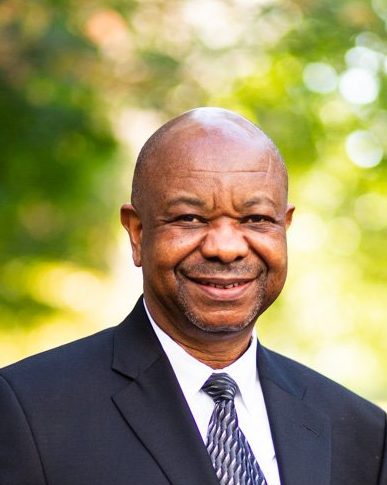
The journey that inspired Meharry’s School of Applied Computational Sciences began with a 17-year-old arriving in America with nothing but determination—and $40 in his pocket.
As a child, Fortune S. Mhlanga, Ph.D., lived in rural Rhodesia (now Zimbabwe) during apartheid and the Liberation War. Schools were closed, teachers fled, and many young men were recruited into the Liberation forces.
Despite the turmoil, Mhlanga believed his path was written in the stars.
“I felt like since the day I was born, the stars were aligned for me,” he said. “The real stars, they are people. I feel like people were just aligned.”
His parents, firm believers in the power of education, saw no choice but to send him to the United States. His brother in Detroit connected him with a friend, Pete McCoy, who offered to host Mhlanga over summers and school breaks in Searcy, Arkansas.
“I flew alone to JFK International Airport. Then I took an NYC cab to LaGuardia and managed a connection in Memphis before finally joining the McCoy family in Arkansas,” he recalled.
After excelling at Harding Academy, Mhlanga enrolled at Harding University. Without scholarship support, he was responsible for covering his tuition.
“I worked 60 to 80 hours a week. My day started at the cafeteria at 4:30 a.m. I was also a physics lab assistant and spent the evening cleaning and monitoring the dorms,” he said.
Instead of cashing his paycheck, he signed it over to the Harding bursar, Mr. Tucker. The two developed a bond, though Mr. Tucker always held him accountable for his student balance.
Despite his efforts, Mhlanga still owed $6,000 upon completing his computer science degree. He was allowed to walk in commencement—but not to receive his diploma.
“I realized I had to talk to him man to man,” Mhlanga said. “I told him, if I go back to Zimbabwe without a diploma, there’s no way I’ll get a job. The only way I can repay Harding is if I have my diploma.”
Mr. Tucker trusted him—and handed him the degree.
Mhlanga then moved to Montgomery, Alabama, where he rejoined the McCoys. He accompanied Pete McCoy to Faulkner University each day and began sitting in on Dr. Tony Hopper’s calculus class. One day, he stunned the class by rising to the board and explaining all 11 rules of integration. Dr. Hopper was so impressed, he asked Mhlanga to teach.
“He came to look for me and said, ‘Fortune, my next class is in 15 to 20 minutes. You are teaching. Here’s the topic,’” Mhlanga recalled. “I just did a fabulous job. From there, Tony and I became so close.”
After a brief stay in Montgomery, Mhlanga returned to Zimbabwe and took a job as a junior programmer at Realtime Computers. Within a month, he was promoted to training officer and shortly after that, systems analyst.
Then came a life-changing opportunity. Dr. Chris Chetsanga—a family friend, church elder, biochemist, and dean at the University of Zimbabwe—told him about a USAID-funded program.
“He told me we have received USAID funding to hire three new staff development fellows in computer science. It will support you to get a Ph.D. in the U.S.,” Mhlanga said.
He accepted—but first, he made good on his promise to Mr. Tucker.
“I worked two jobs—Realtime by day, and teaching computing and technology at Harare Polytechnic in the evenings. I managed to pay back my tuition debt to Harding within a year.”
Mr. Tucker never forgot that integrity.
“He told me, if you know anybody who wants to come to Harding, just send a letter because I know the money will be paid,” Mhlanga recalled.
He went on to complete both his M.S. and Ph.D. at the New Jersey Institute of Technology, then returned to Zimbabwe, where he soon became chair of the Computer Science Department.
In 2002, Dr. Hopper recommended Mhlanga to the vice president for academic affairs at Faulkner University, who recruited him to start a computer science program. His reputation as a visionary educator grew.
Later, he became director of the School of IT and Computing at Abilene Christian University and founding dean of the College of Computing and Technology at Lipscomb University.
Each step was supported by one of the “stars” in his life—friends, colleagues, and mentors who believed in his purpose and potential.
In 2020, Mhlanga arrived at Meharry Medical College as the founding dean of the School of Applied Computational Sciences, ready to lead the institution into the era of big data and artificial intelligence.
“We have embraced the epiphany of big data analytics,” he said. “We are sitting here today looking at all this and saying to ourselves—we can actually do it. And we are doing it.”
In just four years, Mhlanga has led the school to:
- Launch five Master of Science programs: bioinformatics, biomedical data science, computer science, cybersecurity assurance, and data science.
- Establish two doctoral programs in biomedical data science.
- Develop a NASA-funded summer program introducing Nashville-area high school students to data science.
- Enroll more than 100 students.
The school is also pursuing research that applies artificial intelligence and data science to improve health outcomes:
- Advancing ethical and responsible AI in medical systems.
- Leveraging AI and machine learning to identify protein functions.
- Developing explainable machine learning for sleep apnea diagnosis.
- Building a data infrastructure to support maternal health care for low-income women with substance use disorders.
- Applying AI-driven cybersecurity to protect healthcare data.
These advancements are propelling Meharry—and the populations it supports—toward a more forward-thinking and health-empowered future.
“This is Meharry,” Mhlanga said proudly. “Look at not just what Meharry is doing—but what Meharry is capable of doing.”