Traveling through
Meharry Medical College
Est. 1876 · Nashville, Tennessee
Scroll to explore
21st Ave. North between Alameda Street and Meharry Blvd.
Harold D. West Basic Sciences Building
This building opened in December 1976 and is named in honor of Meharry's first African-American president, Harold Dadford West, Ph.D. This building houses the administrative and faculty offices for the School of Medicine. The building also contains several lecture halls, laboratories, study rooms and lounges, computer labs, meeting rooms, and a testing center.

2001 Albion Street
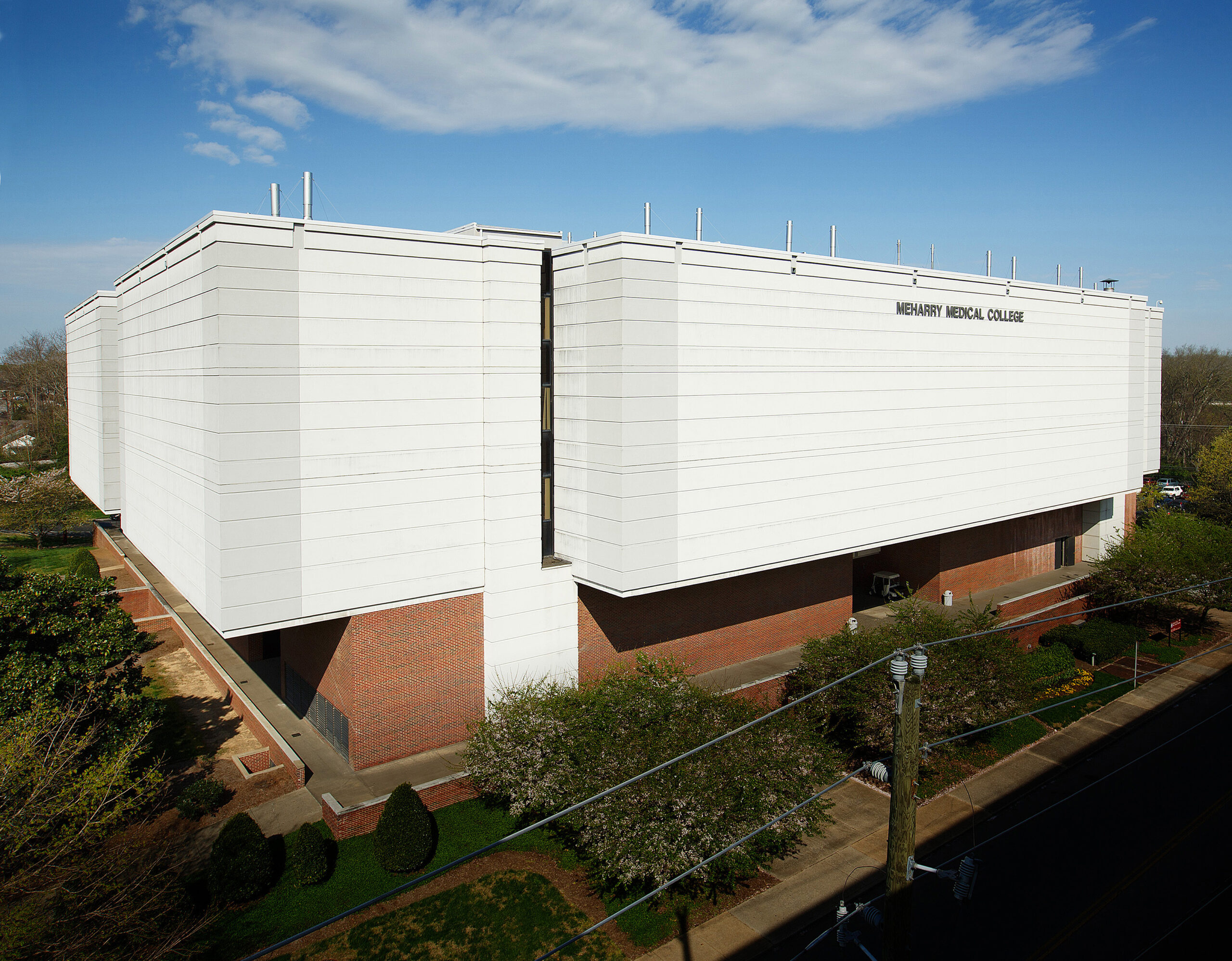
Stanley S. Kresge Learning Resources Center
The S.S. Kresge Learning Resources Center (LRC) was built with funding from the Stanley S. Kresge Foundation and opened in 1973. The building currently houses the medical library, four lecture halls, administrative offices and the Pamela C. Williams, M.D., Simulation and Clinical Skills Center. Renovations include the installation of energy saving plumbing, a new energy saving vestibule, sun screens and new thermo double pane glass windows. The LRC is a Green and LEED certified building.



Corner of Albion St. and Dr. D.B. Todd Jr. Blvd.
Dr. Dorothy Brown Hall
Dorothy Brown, M.D. '48 is one of Meharry's noted local alumni. She was the first Black female to be licensed as a surgeon in Tennessee (and the South) and the first Black female to be elected to the Tennessee Legislature.
The building houses Enterprise Data and Analytics Division offices, several research offices, and the College's high performance computing datacenter.
The building houses Enterprise Data and Analytics Division offices, several research offices, and the College's high performance computing datacenter.
Facing Dr. D.B. Todd Jr. Blvd., between Meharry Blvd. and Albion Street
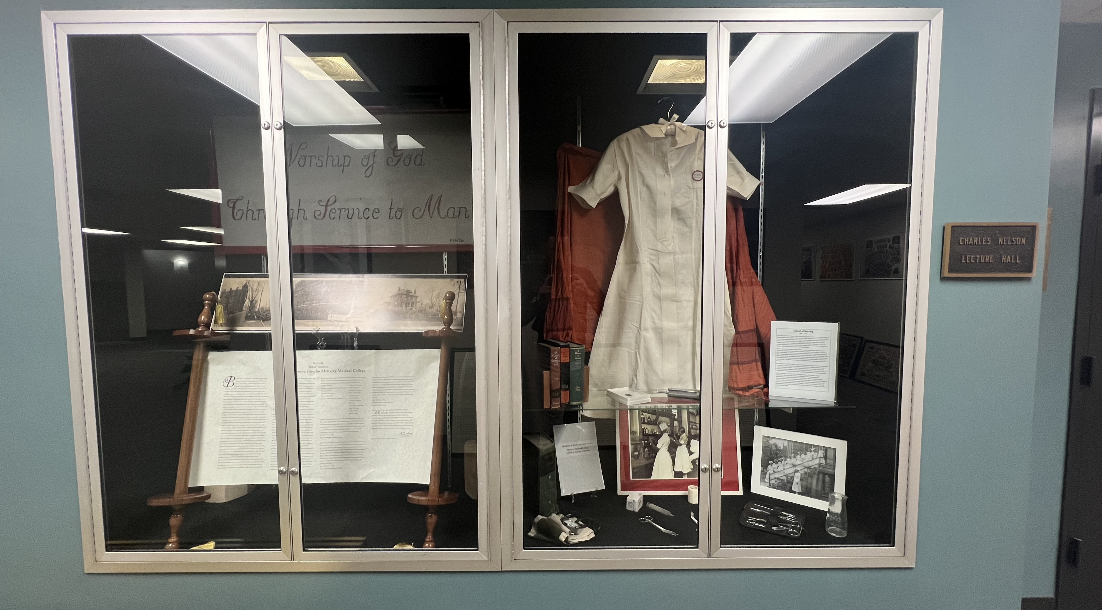
"I'm going to be a doctor."
The Office of Information and Technology building opened in 1972 and serves as the hub for information technology and telecommunications on campus.
On its exterior wall, the iconic Meharry mural captures the spirit of the institution: You can't reach young minds too early. Work hard in school. Achieve greatness.
On its exterior wall, the iconic Meharry mural captures the spirit of the institution: You can't reach young minds too early. Work hard in school. Achieve greatness.
Facing Dr. D.B. Todd Jr. Blvd., between Meharry Blvd. and Albion Street
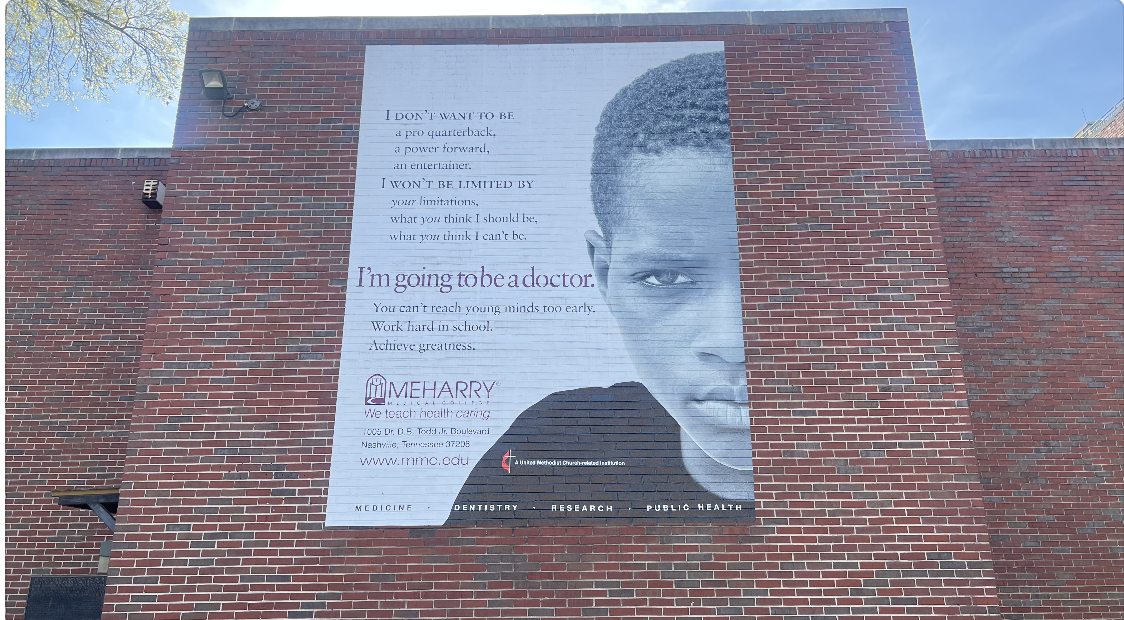
Meharry's Arch — George W. Hubbard Hospital
What now houses the Human Resources Department was formerly Hubbard Hospital. Named for Meharry's first president, Dr. George W. Hubbard, it was built in 1931 and is now known as the Old Hospital. It sits between the dental school and the Meharry Clinic (Comprehensive Health Center).
Currently a multi-use facility, it houses various departments of the Office of Human Resources, pediatrics, family medicine, internal medicine, obstetrics/gynecology, surgery, and psychiatry/neurology, as well as clinical research centers such as the Women's Health Research Center and the Center for AIDS Health Disparities Research.
Currently a multi-use facility, it houses various departments of the Office of Human Resources, pediatrics, family medicine, internal medicine, obstetrics/gynecology, surgery, and psychiatry/neurology, as well as clinical research centers such as the Women's Health Research Center and the Center for AIDS Health Disparities Research.

Near the Meharry Campus — Nashville, Tennessee
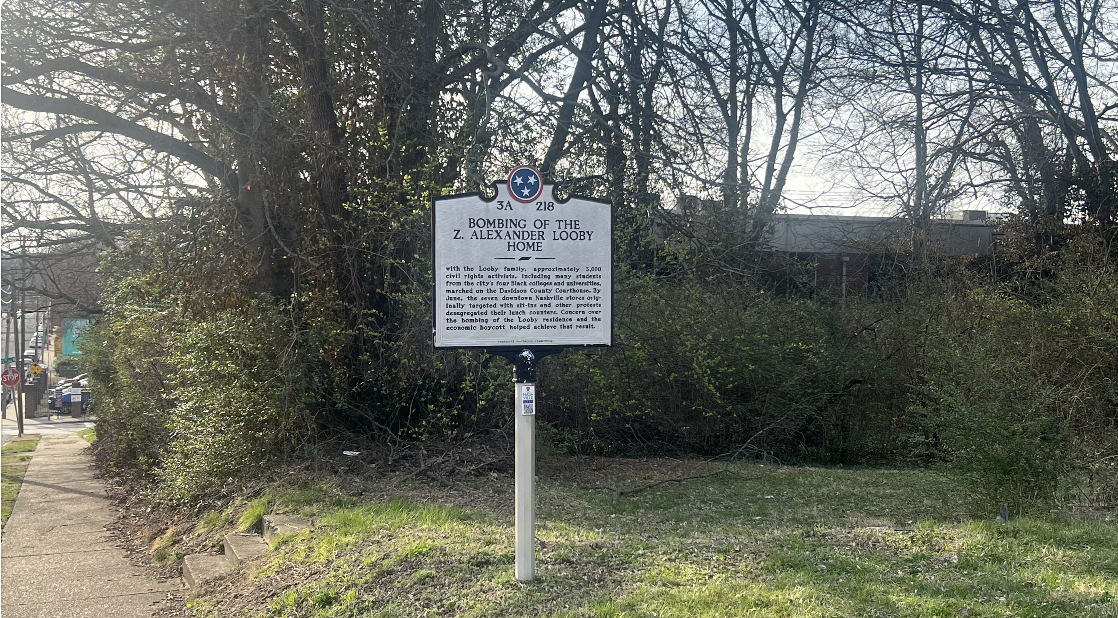
Z. Alexander Looby Home
Z. Alexander Looby was a key civil rights attorney in Tennessee and one of two Black Nashville City Council members when his home was bombed on April 19, 1960. He and his wife, Grafta, survived, though the house was badly damaged.
Originally a small white cottage, they reinforced it with brick as attacks on civil rights leaders increased. After the bombing, the house was rebuilt for security: large windows were replaced with narrow, high ones, the front door was moved to the driveway side, and a bomb shelter was added.
Looby's home illustrates how violence of the era influenced even leaders' residences. Today, the house remains unoccupied and closed to visitors.
Originally a small white cottage, they reinforced it with brick as attacks on civil rights leaders increased. After the bombing, the house was rebuilt for security: large windows were replaced with narrow, high ones, the front door was moved to the driveway side, and a bomb shelter was added.
Looby's home illustrates how violence of the era influenced even leaders' residences. Today, the house remains unoccupied and closed to visitors.